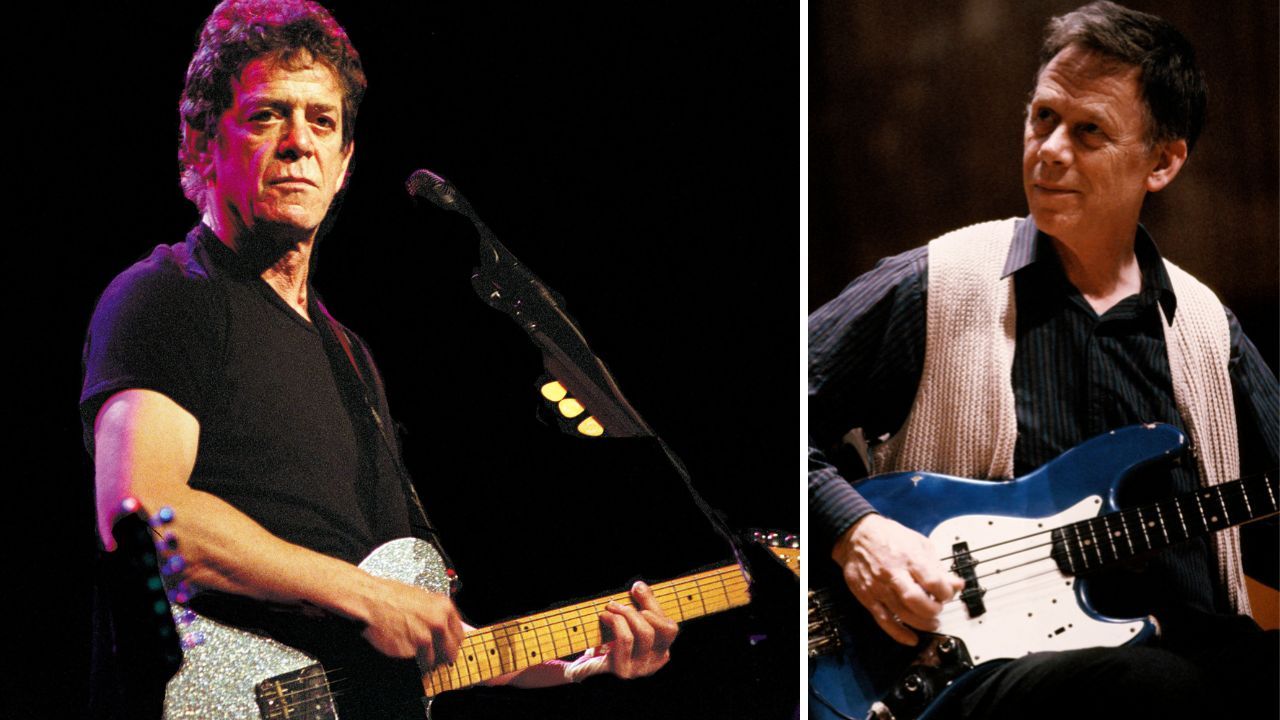
Herbie Flowers: The Bass behind Lou Reed’s Iconic ‘Walk On the Wild Side’
Herbie Flowers, a celebrated bassist known for his work with bands like Blue Mink and Sky, left an indelible mark on the music scene. His collaborations with legends such as David Bowie and T. Rex are well-documented, but it’s his unforgettable bassline on Lou Reed’s Walk On the Wild Side that truly showcases his talent.
Beginning his musical journey in the 1950s, Flowers initially played the tuba and double bass while serving in the royal Air Force. Over his extensive career, he participated in more than 20,000 recording sessions, often without knowing the artists behind the tracks. As he recounted in an interview with Bass Player, “back then, the pay was around £6 for a three-hour session, during which we recorded about 20 minutes of music. I spent more time with session drummer Barry Morgan than I did at home! The bookers rarely shared details about the artists.”
The Legendary Bassline
Flowers’ contribution to Walk On the wild Side is especially noteworthy. He crafted a unique bassline by layering sounds from both a double bass and a Fender Jazz guitar, creating a rich, textured sound that complements the song’s dark themes. “I recorded that using my old English pine double bass and my Fender Jazz. there was no grand inspiration-just a simple progression of C and F chords repeating. I decided to add the bass guitar on top to experiment with the sound,” he explained.
Despite the song’s acclaim, Flowers humorously reflected on his compensation, stating, “People often say, ‘You must be making a fortune from that classic!’ I only received £12 for the session, and Bowie, who was awarded Producer of the Year, didn’t even show up until after all the tracks were laid down. It was just a stroke of luck for me.”

This interview originally appeared in the october 2006 issue of Bass Player.
Studio Insights from a Session Pro
When asked about the essential rules for studio musicians, Flowers emphasized punctuality and efficiency: “You can’t afford to be late.You’re given a song or a chord chart, and you need to come up with your basslines quickly. Stick to the click track,finish your job,and leave as soon as you’re done.Studio time is costly, and producers don’t want you lingering around.”
Band dynamics and Ownership
Reflecting on his time with T. Rex,Flowers noted,”I felt somewhat like a band member. Though, T. Rex was fundamentally Marc Bolan’s project. He was the creative force, and we were compensated for our roles, which I was fully fine with.”
When it comes to ownership of recordings, he stated, “I wouldn’t want to own any part of Diamond Dogs or Transformer. I had no role in writing Walk On The Wild Side, despite its fame.It’s just a bassline!”
Musical Collaborations and Equipment
Flowers reminisced about his time with blue Mink, which formed during a session at Morgan Studios. “we were initially booked for a band called Family Dog, but after finishing early, we recorded Roger Cook’s song Melting Pot, which unexpectedly climbed to No. 2 on the charts.”
He also discussed his work with Sky, a band that emerged from collaborations with drummer Tristan Fry and keyboardist Francis Monkman. “We created Sky while working on John Williams’ Travelling album, and our diverse backgrounds helped us craft a unique sound. We even had a hit with Toccata.”
Regarding his gear,Flowers shared,”For bass guitar sessions,I’d bring my Jazz Bass and a small wallace amp,primarily for monitoring. The engineer would often ask me to turn it off during takes to avoid spill.I also have a beautiful old English pine double bass I bought in 1959 for £40, and an old tuba from my Air Force days.”
His beloved Jazz Bass, purchased in 1959 for $70 at Manny’s Music store in New York, remains unchanged, retaining its original frets and pickups. “It’s completely original,with no transfers,just the Fender ‘F’ on the bridge cover.I had to remove the covers to play comfortably with a pick, but I still keep them.”
Memorable Sessions
Flowers has an extensive list of notable recordings, including War Of The Worlds with jeff Wayne, work with Brotherhood of Man, and contributions to various Eurovision songs. “I’ve played on tracks for Dusty Springfield, Elton John’s early works, and even the iconic Crossroads theme by Tony Hatch, which was one of the toughest sessions I’ve tackled.”