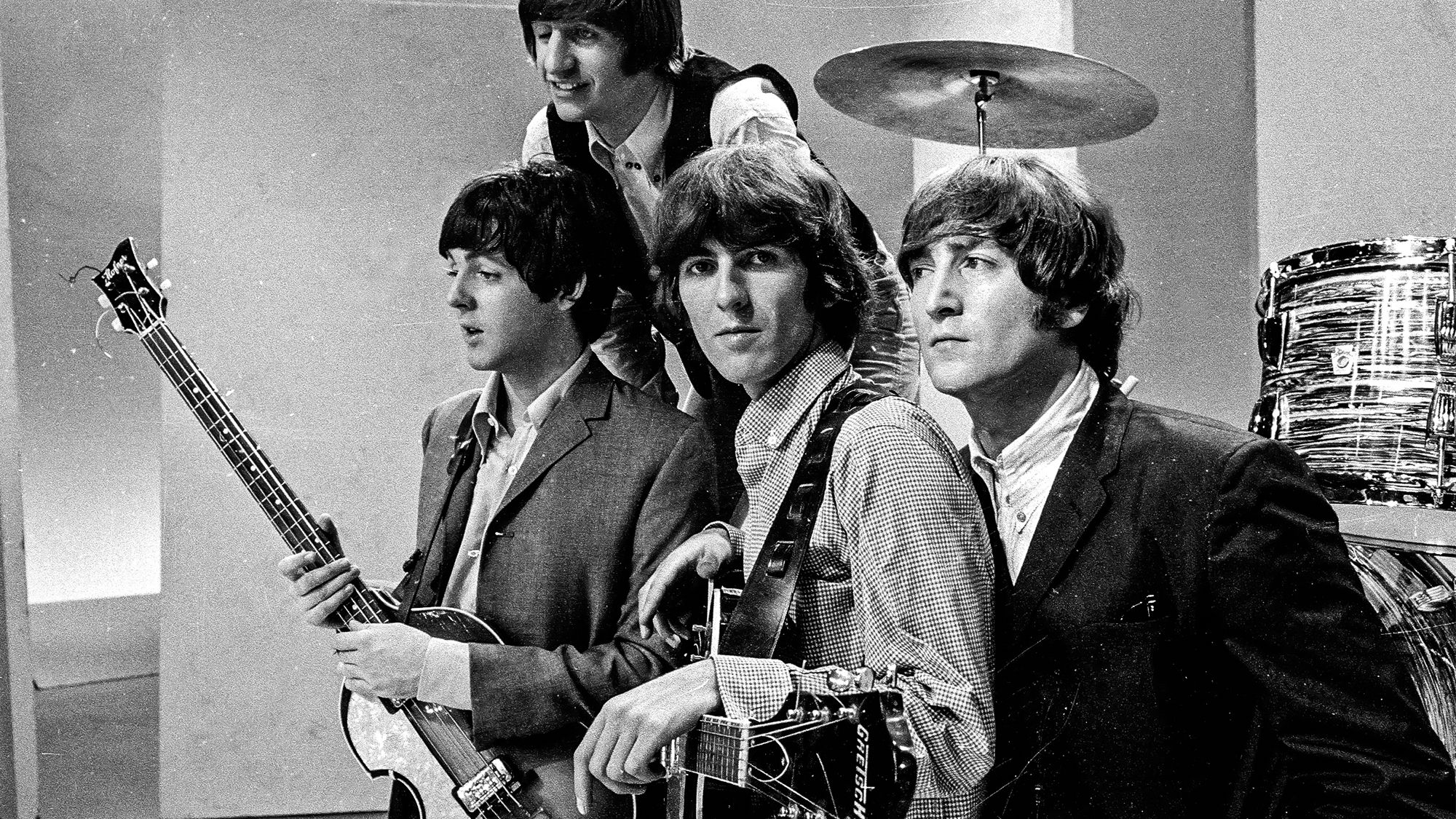
The Beatles: Pioneers of Studio Innovation with ‘Rubber Soul’
For enthusiasts of The Beatles, the upcoming deluxe edition of Rubber Soul is set to unveil a treasure trove of insights, featuring intriguing session outtakes and the previously unreleased John Lennon track “Little Girl.” However, the most compelling narrative surrounding this iconic album transcends the audio gems; it lies in the groundbreaking transformations that took place within abbey Road Studio Two during the fall of 1965.
A Shift in Creative Control
These recording sessions signified a pivotal moment when John Lennon, Paul McCartney, George Harrison, and Ringo Starr began to reject the technical constraints imposed by EMI Studios. They sought to integrate the recording process into their artistic vision-a shift that would pave the way for future masterpieces like Revolver and Sgt. Pepper’s Lonely Hearts Club Band.
Learning from American Sounds
By late 1965, The Beatles had immersed themselves in the world of sound. During breaks from touring, they became avid listeners of American records. The vibrant Motown hits resonated with deep bass and sharp percussion, while The Byrds’ jangly guitars sparkled with an unmatched brilliance.In contrast, The Beatles felt their own recordings were more reflective of EMI’s conservative engineering practices than the innovative sounds they envisioned.
Breaking Free from Tradition
For years, EMI’s recording protocols prioritized technical precision and uniformity, established during a time when classical music and traditional pop dominated the scene. Engineers were trained to produce clean, balanced recordings while adhering to strict operational guidelines.
“It wasn’t a willful arrogance; it was just that we felt we knew better.”
- paul McCartney
The Beatles had reached a point where these regulations hindered their creativity. Paul McCartney later recounted the ongoing struggle between the band and EMI’s engineering team during the Rubber Soul sessions:
“EMI had very firm rules about that, which we always had to break,” he shared with Mark Lewisohn in The Complete Beatles Recording Sessions. “It wasn’t a willful arrogance; it was just that we felt we knew better.”
McCartney was particularly frustrated with the muted sound of his bass guitar in their recordings. He had been told to keep the bass low to avoid skipping on vinyl records, yet he noticed that American records featured robust, prominent bass without issue.
“‘What do you mean we can’t have bass?’” he recalled challenging abbey Road’s staff. “‘I was at a club last night and heard a record with that kind of bass!’”
The engineers would frequently enough respond by referencing company policy.
“‘Well, our rule book says…’”
Defying the Norms
The Beatles had little tolerance for outdated regulations.
“‘They’re obsolete, let’s innovate!’”
A defining moment occurred during the recording of “Nowhere Man.” The band desired electric guitars with a dazzling brightness, far exceeding the treble levels typically allowed by EMI. Norman Smith, their recording engineer as 1962, cranked the high-EQ potentiometer to its maximum.
“They were secretly pleased because they had been the engineer who’d pushed the treble beyond the allowed limits on a song.I think they were quietly proud of those moments.”
– Paul McCartney
Yet,it still wasn’t sufficient.
“‘But that’s all I’ve got,’” McCartney recalled Smith responding. “‘I’ve only got one pot and that’s it!’”
The Beatles’ solution was straightforward.
“‘Well, run that through another set of faders and crank the treble up on that,’” McCartney suggested. “‘and if that’s not enough, we’ll go through another set of faders. Try it for us. If it sounds terrible,fine,we’ll discard it. But it just might sound fantastic.’”
Often, it did. McCartney believed that Smith and his fellow engineers enjoyed bending the rules alongside the band.
“You’d find, ‘Oh, it worked!’ and they were secretly glad as they had been the engineer who’d put three times the allowed value of treble on a song. I think they were quietly proud of all those things.”

Transforming the Studio into an Instrument
This spirit of innovation turned Rubber Soul into a significant milestone in The Beatles’ journey. The studio evolved into a creative laboratory, with the band taking charge of the recording process.No longer was the control room merely documenting performances; musicians, producers, and engineers collaborated to create unprecedented sounds in pop music.
When Geoff Emerick took over as the Beatles’ chief recording engineer in 1966, he inherited a band that no longer viewed the studio as a place of limitations. Partnering with producer George martin, Emerick embraced the same spirit of defiance against EMI’s conventions, enabling The Beatles to realize increasingly ambitious concepts on Revolver.
Microphones were positioned closer than previously permitted, and tape machines were manipulated in innovative ways. Techniques like Artificial Double Tracking, tape loops, extreme compression, and radically reimagined instrument sounds became integral to the band’s expanding sonic palette.
By the time work commenced on Sgt. Pepper’s Lonely Hearts Club Band, experimentation had become standard practice. the studio itself transformed into an instrument-every knob and tape machine serving as a means of expression.
All of this began during the Rubber Soul sessions, when four musicians decided to reject limitations.
The Lasting Impact of ‘Rubber Soul’
As fans delve into the newly released outtakes and alternate versions-including the eagerly anticipated “Little Girl”-they will discover more than just works in progress. They will witness a band realizing that the recording studio could be as creative an instrument as a guitar or piano.
This is the true legacy of Rubber Soul. It was not merely a bridge between Beatlemania and the psychedelic era; it marked the moment when The Beatles transitioned from recording music to inventing it.