The Beatles’ Bold Nod to the Beach Boys: A Tale of Influence and Controversy
While the Beatles revolutionized the music landscape, they were never hesitant to acknowledge their inspirations. Their initial albums featured renditions of tracks from beloved American musicians such as Buddy Holly, Little Richard, Carl Perkins, and various Motown artists.
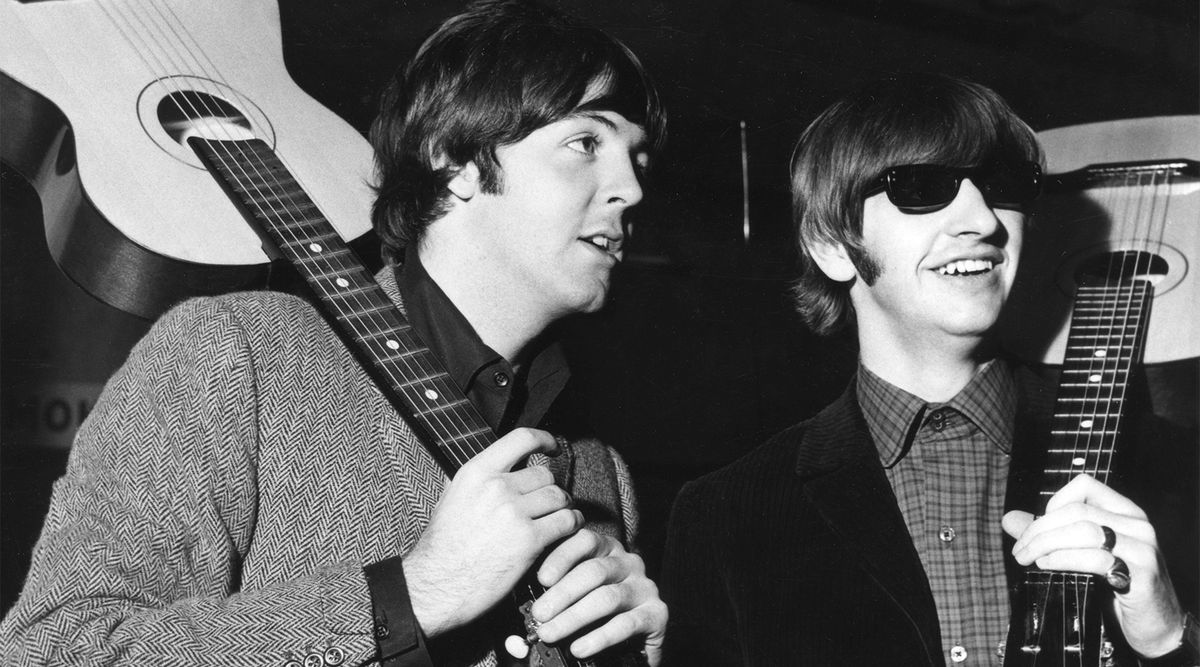
These influences were deeply embedded in their musical DNA. George Harrison’s striking Futurama guitar was purchased to emulate his idol Holly at a time when Fender Stratocasters were yet to arrive in the U.K. Paul McCartney frequently paid homage to his musical predecessors, whether by channeling Little Richard’s vocal flair or infusing Motown vibes into tracks like “Got to get You into My Life.”
A Beach Boys Tribute in disguise
One of the most evident nods to another band came in the form of “Back in the U.S.S.R.,” a McCartney creation from the 1968 White Album, crafted with the essence of a classic Beach Boys song. The Beatles were indeed fans of the Beach Boys, with John Lennon and McCartney drawing notable inspiration from Brian Wilson’s innovative work on Pet Sounds, admiring the group’s intricate harmonies as much as their own.
So, how did “Back in the U.S.S.R.” evolve into a tribute to the Beach Boys? The answer lies with Mike Love, a member of the Beach Boys.
Transcendental Meditation and Creative Sparks
The Beatles crossed paths with Love in February 1968 during their journey to Rishikesh, India, to study Transcendental Meditation under Maharishi Mahesh Yogi. It was there that Lennon, McCartney, and Harrison penned a significant portion of the White Album, including “Back in the U.S.S.R.”
Originally conceived in England as “I’m Backing the U.K.,” the song was a playful jab at a patriotic campaign from early 1968 aimed at revitalizing the British economy. However, upon arriving in India, McCartney rebranded it as “Back in the U.S.S.R.” as a playful twist on Chuck Berry’s “Back in the U.S.A.,” cleverly referencing the Cold War tensions between the U.S. and the U.S.S.R.
interestingly, the Beatles had a considerable fanbase behind the Iron curtain, and McCartney’s clever rewrite offered a humorous outlook on a Soviet traveler eager to return home from America.
“it’s tongue-in-cheek,” mccartney explained in Barry Miles’ 1997 biography, Paul McCartney: Many Years from Now. “This is a traveling Russkie who has just flown in from Miami Beach. He can’t wait to get back to the Georgian mountains: ‘Georgia’s always on my mind’; there are all sorts of little jokes in it.”
Humor Amidst Tension
With some distance from the cold war, such humor was feasible. As McCartney shared with Forbes in 2023, ”We were in the U.K., so I could poke fun at it in my own way.”
Mike Love contributed to the song’s bridge, where the Beatles echoed the Beach Boys’ early surf anthems, celebrating the allure of beautiful girls from Russia, Ukraine, and Georgia.
“I was at the breakfast table when McCartney came down with his acoustic guitar, playing ‘Back In the U.S.S.R.,’” Love recalled. “I suggested he should mention the girls all around Russia, Ukraine, and Georgia.He was creative enough not to need my help, but I think it was light-hearted and humorous of them to do a take on the Beach Boys.”
McCartney later reflected in an interview with Playboy in 1984, “I just liked the idea of Georgia girls and talking about places like Ukraine as if they were California. It was also ‘hands across the water,’ which I’m still conscious of. ‘Cause they like us out there, even though the bosses in the Kremlin may not.”
A Return to Rock Roots
in the context of the Beatles’ discography, “Back in the U.S.S.R.” marked a return to the straightforward rock and roll sound of their early days. This shift was particularly notable given that just a year prior, the band had released their aspiring psychedelic albums, Sgt. Pepper’s Lonely Hearts Club Band and magical Mystery Tour.
However, the recording of “Back in the U.S.S.R.” was anything but simple.It featured contributions from Lennon (rhythm), McCartney (both rhythm and lead), and Harrison (rhythm and solo), with all three members playing bass guitar. With Ringo Starr temporarily stepping away from the band during the tumultuous White Album sessions, McCartney took on drumming duties, with Lennon and Harrison also adding to the drum track in overdubs.
Upon its release,”Back in the U.S.S.R.” opened the White Album, providing a humorous and accessible introduction to an album filled with increasingly diverse and avant-garde tracks.
Political Backlash and Cultural Impact
Despite McCartney’s intention for a light-hearted approach, the song sparked controversy on both sides of the political spectrum. The right-wing john Birch Society interpreted it as evidence of the Beatles promoting a pro-Soviet agenda, while the left criticized it, especially in light of the Soviet invasion of Czechoslovakia just months before the song’s release. Coincidentally, the Beatles recorded the track on August 22 and 23, shortly after the invasion on August 20.
At the time of the White Album’s release, the Beatles were banned in the U.S.S.R., meaning that Soviet listeners could only access the song through bootlegged copies. The ban was eventually lifted in the 1980s, allowing the Beatles’ music to reach a new audience behind the iron Curtain.
Interestingly, “Back in the U.S.S.R.” may have made its debut performance in the U.S.S.R.when Elton John covered it during a tour, much to the delight of fans but the dismay of Russian authorities, who likely felt mocked. As an inevitable result, McCartney was banned from performing in the country during the 1980s, a sore point for him.
“Probably my single most significant reason for going to Russia would be to play[[[[‘Back in the U.S.S.R.’],” he shared with biographer Barry Miles in 1997.
in May 2003, McCartney fulfilled that dream by performing “Back in the U.S.S.R.” in moscow’s Red Square. Reflecting on the experience, he admitted that he had known little about the country when he wrote the song.
“It was a mystical land then,” he said. “It’s nice to see the reality. I always suspected that people had big hearts. now I know that’s true.”