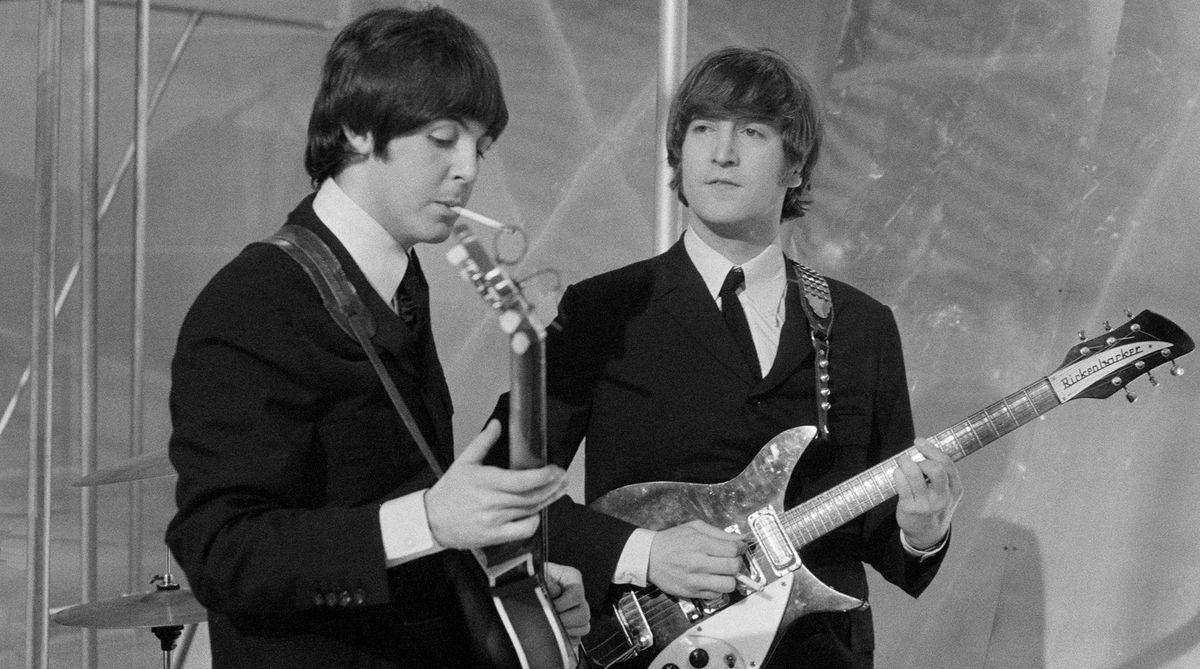
Decoding the Lennon-McCartney Dynamic: The Art of Collaboration in Beatles’ Music
In a groundbreaking new book, authors Robert Rodriguez and Jerry Hammack delve into the intricate recording journey of the Beatles, highlighting the essence of the iconic songwriting duo, john Lennon and Paul McCartney.
Their book, titled Ribbons of Rust, marks the beginning of a comprehensive series that chronicles the Beatles’ recording history. The inaugural volume focuses on the individual and collaborative paths of Lennon and McCartney from July 1954 to January 1963.
The genesis of a Legendary Partnership
During their recent discussion on the Booked on Rock Podcast, Rodriguez emphasized how the Lennon-McCartney collaboration flourished due to the unique talents each brought to the table.
Their partnership actually predates the Beatles, with McCartney joining Lennon’s group, the Quarrymen, in 1957 after witnessing their performance at a local church fair in Liverpool, England.
“What struck Paul on that first day was John’s unconventional chord progressions, using banjo chords on the guitar,” Rodriguez explains. “But it didn’t stop there.”
“John was also improvising lyrics on the fly, and they were clever,” Rodriguez continues. “That spontaneity left a lasting impression on Paul.”
Complementing Each Other’s Strengths
Each songwriter had the ability to compensate for the other’s weaknesses.Where Lennon might struggle, McCartney would excel, and vice versa.
“The real chemistry between them emerged when they recognized each other’s unique gifts,” Rodriguez notes. “They shared a similar taste in music, acting as connoisseurs of rock and roll. This mutual admiration allowed them to assist one another when one would hit a creative roadblock.”
“It evolved into a partnership where they would edit each other’s work, a dynamic that persisted throughout their entire Beatles career, alongside their collaborative songwriting sessions.”
Unique Skills and Adaptability
Their friendship also led to the progress of distinct quirks in their musical abilities. Notably, McCartney is left-handed while Lennon is right-handed, prompting them to adapt and learn from each other.
“I can play a right-handed guitar a bit, just enough to get by at parties,” McCartney humorously shared with Guitar player in 1990. “By that point, I hope everyone is tipsy because otherwise, they’ll catch me out.”
This unique dexterity allowed them to mirror each other’s playing styles, with some of McCartney’s left-handed techniques influencing Lennon’s approach.
Interestingly, Lennon was the only member of the Beatles to master fingerpicking, a skill he honed while observing folk singer Donovan during their time in India studying with the Maharishi.
Learning and Growth
“John was the only one who truly committed to learning it,” mccartney remarked, pointing to “Julia” from the “White Album” as a prime example of Lennon’s fingerpicking prowess. “If you listen to ‘Julia,’ you can here him playing it correctly. I was always proud of him for that.”
While Lennon displayed patience in acquiring new skills, McCartney’s adventurous spirit provided a contrasting yet complementary dynamic.
“I never really bothered with formal lessons,” he admitted.“I tend to jump into things, and by the time I’m ready for my first lesson, I’ve already surpassed it.”
The success of their collaboration can be attributed to a blend of fate and their collective ability to transform abstract ideas into artistic masterpieces.
Moreover, McCartney’s sharp songwriting not only brought the band back to its rock and roll roots but also led them into politically charged territory.