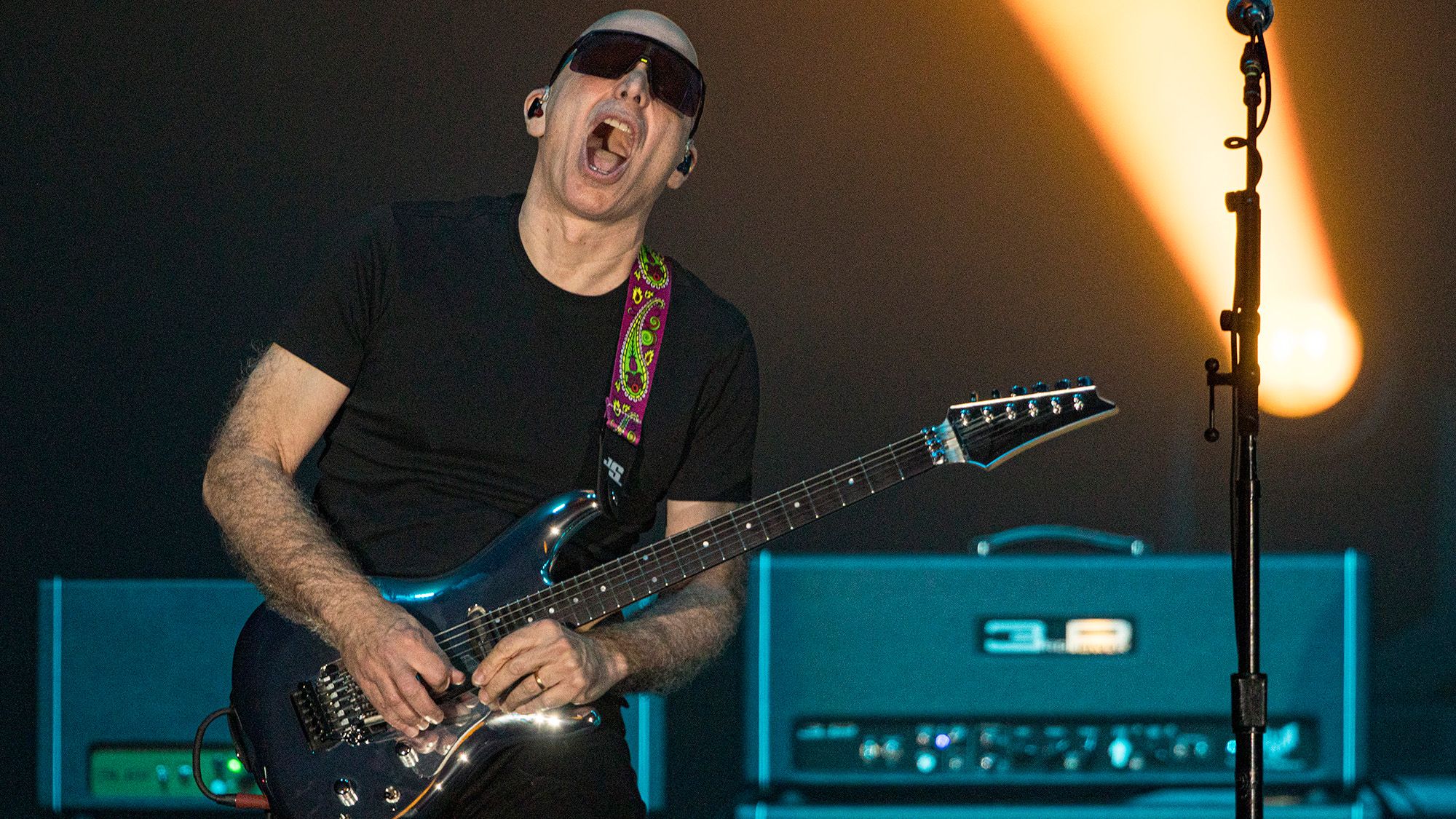
When Joe Satriani requests an amplifier that captures the essence of Eddie Van Halen-especially the sound showcased in Van Halen’s Live Without a Net (1986)-it’s a task that demands utmost dedication and expertise.
This was the challenge presented to Dylana Nova Scott, the visionary behind Minnesota’s 3rd Power Amplification.Tasked with crafting the perfect tone for Satriani during this year’s Sammy Hagar-led Best of All Worlds tour, Scott and satriani collaborated to develop the DRGN 100 Custom Shop head. This innovative amp integrates a variety of features designed to modernize the iconic tones of Van halen’s 1968 Marshall Super Lead (specifically serial number 12301).
The outcome was remarkable, leading Satriani to continue using the amp with the Satch/Vai band, which subsequently prompted Steve Vai to adopt 3rd Power cabinets as well. For Scott, who gained recognition in the late ’80s as the lead guitarist for the San Francisco hard rock band Vain, this project has been a heartfelt tribute-helping one of the most revered guitarists honor the legacy of a dearly missed legend.
Innovative Designs Beyond the DRGN 100
In addition to the DRGN 100, 3rd Power offers other notable designs, such as the Aurora 35, inspired by Dumble amps, and the Lyra, which combines the sounds of a 1962 brown-panel and a 1965 black-panel Fender in a single unit.
Scott’s journey from glam-metal guitarist to a sought-after amp designer for artists like Satriani, Lenny Kravitz, and Joe Walsh is a fascinating tale of passion and perseverance.
From Musician to Amp Designer
What inspired you to launch an amplifier company?
as a musician myself, my passion for creating amplifiers stems from my experiences on stage. Designing a tone in isolation can be misleading; it’s crucial to ensure that the sound resonates with the audience. At 3rd Power,we occupy a unique space between the artist and their fans,aiming to deliver an unforgettable experience.
There’s a distinct thrill when the lights dim and the crowd erupts in applause. Conversely, I understand the pressure of performing in silence, where you must prove your worth.My role is to translate those emotions into sound. Every note that emerges from the amp must connect with the audience.
Learning the Craft
How did you acquire your skills in amp building?
My journey has been largely self-directed, fueled by a lifelong obsession with tone.In high school,I studied electronics and computer programming,which laid the groundwork for my technical skills. As a recording artist, I became attuned to the engineers around me, absorbing their knowledge.
During breaks from touring, I worked at a music store where I received training from DigiDesign specialists. I also had the privilege of learning from renowned sound engineer Chip Davis,who taught me to analyze acoustics by listening to room reflections.
While many were shifting towards digital technology, I found myself drawn to tube amplifiers, immersing myself in the history of iconic brands like Marshall.
Gaining Recognition
It seems your efforts have paid off, especially with Joe Satriani’s endorsement.
Joe has expressed his thankfulness for my work, but it’s not just about being nice; it’s about delivering the sound he envisioned. During our initial conversation, he mentioned discussions with Eddie Van Halen’s technicians, Zeke Clark and tom Weber, about the specific tone he sought.
“We don’t need to see you play every note perfectly; we need you to capture the essence of the moment while paying homage to the king,” I told him.
The 5150 tour marked Eddie’s last with the classic Marshall sound.While he had all the right gear, the tone hadn’t fully transitioned into the modern Van Halen sound. As they performed both old and new material, the energy remained palpable, which is crucial for any performance.
Afterward, the rig evolved, and some classic songs didn’t translate well, as Sammy Hagar noted. Joe had to be precise in his requirements, and Eddie’s techs pointed him to me, saying, “You should reach out to Dylana Scott.”
Designing the DRGN 100
What were your primary considerations when creating the DRGN 100?
I told Joe, “Let me craft the ultimate racecar for you.” Did he wont more power in certain areas, better traction, or quicker acceleration? As a fan of his artistry, I wanted to ensure he didn’t just play a cover set. I emphasized the importance of interpreting the moment while honoring Eddie’s legacy.
It’s a two-hour set filled with dynamic moments, and this amp was designed to elevate joe’s performance, ensuring that even the audience members in the back row could feel the energy and excitement.
Distinctive Features of Your Amps
Some of your other models, like the Aurora 35 and the Lyra, offer unique functionalities.
The Lyra features two classic Fender circuits from the 1960s,complete with tube-driven spring reverb and attenuation,delivering an authentic sound. The Aurora 35 starts in the high-fidelity Fender realm, reminiscent of a Dumble, and expands from there.
The signal path is intricate due to the stacking and gain staging, but it’s user-friendly. You still have the mid-switch option for different voicing needs.
modern Innovations
Your amplifiers also incorporate advanced features like HF damp and HybridMaster.
The High Frequency Damp is tailored for professional musicians. Imagine being a hired guitarist and the vocalist says your sound is too luminous. If you adjust the treble on your amp, you risk compromising your performance. The HF Damp allows you to maintain your tone while subtly reducing brightness, ensuring you keep your gig.
Your gain structure relies on your tone stacking, and this feature preserves all your sonic choices. It’s a lifesaver during performances.
The HybridMaster is a patented micro volume control that I refined over years. I analyzed various attenuation methods, some offering minimal reductions while others fell short. I aimed to create a hybrid solution that presents the user with a single knob, which internally manages multiple adjustments.
When you lower the volume, the sound can lose its impact. I developed a method to decrease volume without sacrificing tone, ensuring that the remaining sound feels vibrant and alive.
Beyond Amplifiers: The MagFRAG Pickup Line
You also offer your own line of MagFRAG pickups.
This line represents my vision of what modern pickups can achieve. I engaged with online communities to understand the debates surrounding pickups, but I approached it differently than customary winders, focusing on the sound characteristics of different magnets.
I aimed to create a pickup that utilized Alnico II for treble strings, Alnico IV for mid-range, and Alnico V for bass strings, ensuring each magnet complements its respective string pair. Tracii Guns is a notable fan, using them on his main guitars. The pickups enhance the instrument’s sound, adding a touch of brilliance to the overall tone.