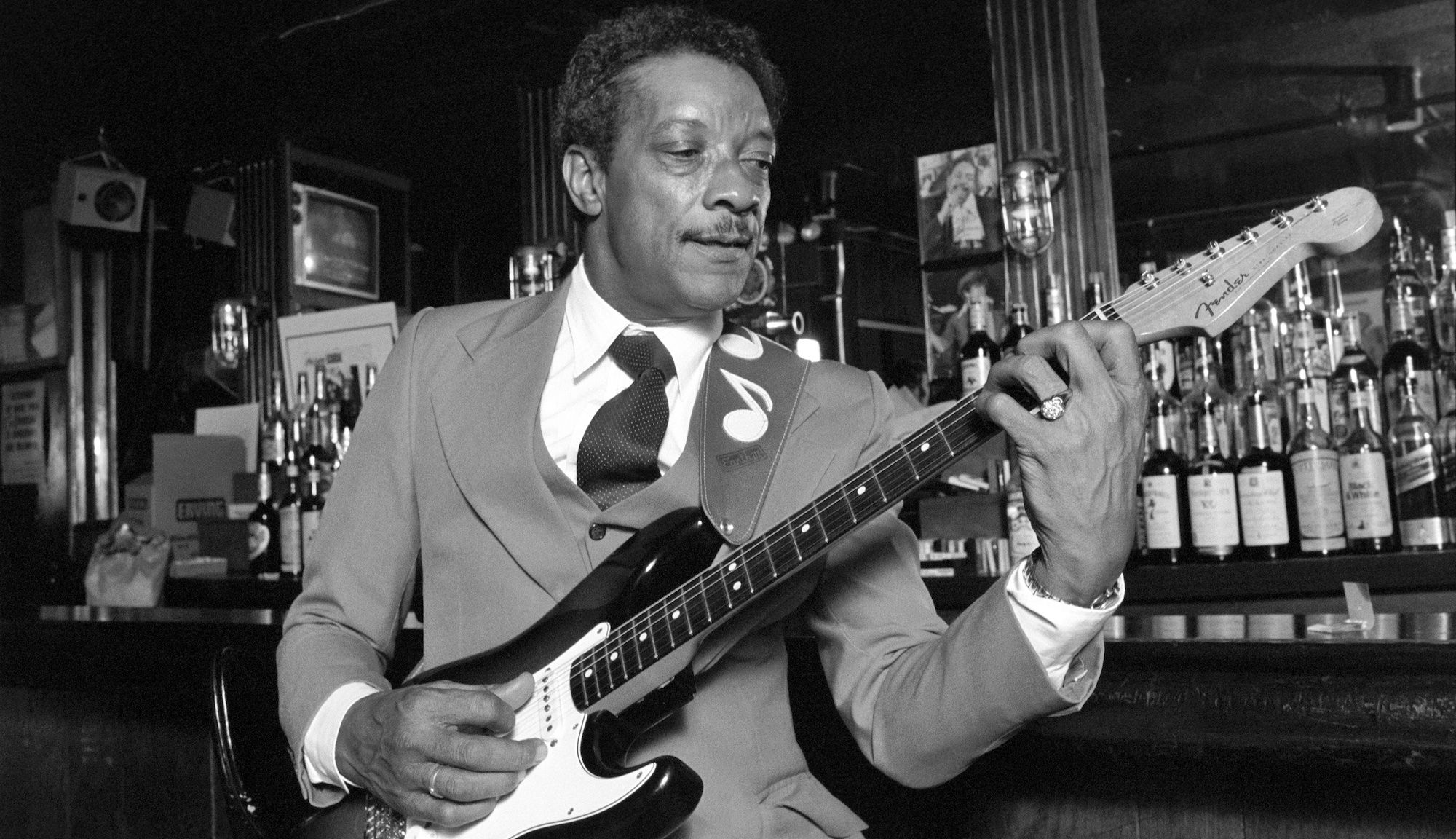
This conversation with teh legendary Hubert Sumlin first appeared in the March 1992 edition of Guitar World.
The Unbreakable Bond: Howlin’ Wolf and Hubert Sumlin
In the realm of music, few partnerships resonate as profoundly as that of the iconic blues vocalist Howlin’ Wolf and his masterful guitarist, Hubert Sumlin. Their collaboration, which began in 1954 and lasted until Wolf’s passing in 1976, was pivotal in shaping some of the most unforgettable and influential sounds in American roots music.
Sumlin’s distinctive style-characterized by sharp,economical fills,a unique rhythmic flair,and expertly bent notes-was as essential to the blues classics like Spoonful,Smokestack Lightnin’,Killing Floor,and The Red Rooster as Wolf’s powerful growl.
Influence on Generations of Musicians
Numerous blues and rock guitarists have drawn inspiration from Sumlin’s work with Howlin’ Wolf. Jimi Hendrix frequently performed Killing Floor, while the Rolling Stones, Eric Clapton, and many others have kept The Red Rooster alive in their repertoires. The Doors even reimagined Back door Man, and Stevie Ray Vaughan’s 1991 compilation, The Sky Is Crying, features his rendition of May I Have a Talk with You. Renowned guitarists like Jimmy Page, Eric Clapton, and Jeff Beck have all acknowledged Sumlin’s influence, emulating his techniques on tracks like Spoonful and Smokestack Lightnin’.
For 23 years, Sumlin was the backbone of Howlin’ Wolf’s band, with a brief hiatus in 1956 when he played for Wolf’s rival, Muddy Waters. Following Wolf’s death, Sumlin embarked on a long-awaited solo career, becoming a staple in Chicago’s blues scene and making appearances at various festivals.
Learning from the Master
Did Howlin’ Wolf give you specific instructions on what to play?
Not exactly. when I first joined him, he told me I wasn’t ready for his music and suggested I take some time to reflect-whether it was a day, a week, or even a year. “Come back when you’re ready,” he said. “Once you understand how to play my music,then you’re hired.”
Determined, I went home and practiced with my guitar under my pillow, knowing he was serious. I had been using a pick for years, but one morning I decided to play without it. The first song that came to mind was Smokestack Lightnin’. I played it better than ever and realized I didn’t need a pick; my fingers where enough. That was a turning point for me.
You must learn to utilize your instrument to its fullest potential. There are multiple ways to play each note, and you need to explore them all.
Was it the moment you stopped using the pick that everything clicked?
Absolutely. I began to play with much more feeling. I never used a pick again; that was my key to unlocking my sound. My tone and style evolved right then. Many people don’t grasp how I play; the average guitarist might not understand my approach. But it’s my unique gift. I have five fingers-how can a single pick compete with that?
Crafting a Unique style
Your style is notable for its minimal use of chords.
true, but I employ a variety of techniques. As Muddy waters once remarked, I have many tricks up my sleeve. I know when to step in and when to hold back. Many guitarists overlook this aspect of playing. It’s all about knowing how and where to place your notes.
Did your distinctive playing style develop from your long tenure with Howlin’ Wolf?
Yes and no. My brief time with Muddy Waters also taught me a lot, especially from his lead guitarist, Jimmy Rogers. I absorbed something from every guitarist I worked with, taking bits and pieces from each and creating my own style. That’s the essence of Hubert Sumlin. I encourage any guitarist to listen to their favorites and learn from everyone.
A Unique Musical Education
One intriguing aspect of your background is your formal guitar training at the Chicago Conservatory of Music. How extensive was your education?
I studied for six months with an older gentleman from the chicago Symphony Orchestra. it was the first time I encountered someone who coudl play both opera and blues on the guitar. It was enlightening, especially since I didn’t know how to read music or understand the piano keyboard. He taught me so much in just half a year.
Even though you primarily played electric guitar with Wolf, your sound frequently enough carried a country blues essence. Is that your musical foundation?
As a child, I aspired to be a jazz musician like Charlie Christian, but I was also deeply influenced by the blues. I was surrounded by amazing artists like Charley Patton, Lonnie Johnson, and Robert johnson. When I joined Wolf and Muddy, I realized they had played with these legends, which was mind-blowing for me.
I still remember my old 78 record of Charley Patton. He was a genius. I once asked Wolf about him, and he said, “You’re to young to understand.” It always saddened me that I missed the chance to see and play with those pioneers, as they laid the groundwork that Wolf and Muddy electrified and expanded. If Wolf and Muddy are the fathers of rock and roll, then those acoustic artists are the grandfathers.
Reflections on Legacy
It seems Wolf was aware of the generational gap between you two.
Indeed. He once told me he felt “40 years too early.” he recounted stories of plowing mules barefoot in the snow, and I thought he was exaggerating. But he insisted he was serious. He believed things were improving all the time. The following year, he fell ill and required dialysis.
You are often seen as a bridge between the Delta bluesmen and rock and roll. You played with Wolf, who was a contemporary of Robert johnson, and you also influenced the next generation of rock guitarists.
I take great pride in that. I had the chance to meet many of those musicians. I met Eric Clapton in 1970 during the recording of Wolf’s London Sessions. I wasn’t initially supposed to be there, but Clapton insisted, saying, “If Hubert’s not there, I won’t record.” Wolf echoed that sentiment, so they had to bring me in.
during those sessions, Wolf was on dialysis, with doctors attending to him constantly. There were nights we didn’t record; we just hung out and enjoyed ourselves. Mick Jagger and bill wyman dropped by,and we partied until dawn.The next morning, the cleaning lady found everyone sprawled out on the floor, with Mick Jagger’s head inside the bass drum. It was a wild time.
Wolf and I had our share of intense arguments.We knocked each other’s teeth out, but it never mattered; we always reconciled.
Did you spend much time with Clapton?
Yes, I did. One day, Eric sent a limousine to pick me up, and we drove out to his beautiful mansion in the countryside. It was like a castle.After a lovely dinner, he took me to his basement, which was filled with guitars-like a factory of instruments.
He told me to choose two guitars as gifts. As I walked around, I spotted a case in the middle of the room. I asked what was inside, and he downplayed it, saying, “It’s nothing.” I opened it to find a stunning Fender Stratocaster. I started playing it right there on the floor.
he insisted I choose two guitars from the wall, but I told him I couldn’t take his favorite. He urged me to take it, saying he’d prefer it to be with someone who would appreciate it. I kept it for two years but hardly played it. When we both attended the Montreux Jazz Festival, I returned it to him. He asked if I wanted anything for it, but I said, “It’s your guitar; don’t embarrass me.” He just hugged me. He’s a genuinely nice guy.
making History with Howlin’ Wolf
Did you realize you were making history while recording those classic tracks with Wolf?
Not really, and I didn’t care much at the time. However, I knew he was destined for greatness, and I was committed to helping him reach the top.
When you’re recording with someone of Howlin’ Wolf’s caliber, you give it your all.There were days when I recorded on an empty stomach, and I would remember those times, fueling my desire to never return to that state. I played with everything I had!
What was your personal relationship with Wolf like?
We had a father-son dynamic, despite our fierce arguments. We fought hard, but it never affected our bond.
You fought with wolf? He was a massive man.
Oh, he was enormous! He could wrap his fingers around my guitar neck multiple times. One night after a gig, I was distracted by a girl who had been flirting with me all night. When I returned, Wolf was furious because he had to load my gear. He yelled at me in front of the band, and I felt humiliated. I thought, ‘I can’t let him do this to me.’ So, I hit him in the face, but he barely flinched. He turned slowly and slapped me, sending me rolling down the ramp. I got back up and yelled at him, onyl to be slapped down again, losing some teeth in the process.
Was that why you left to play with Muddy Waters?
No, we made up quickly.The next morning, my wife told me Wolf had been waiting in his car outside my house all night. He apologized and even gave me money to fix my mouth. I left to play with Muddy as he offered me a much higher salary. They were rivals, and Muddy wanted to lure me away from Wolf.
Was the rivalry between Wolf and Muddy obvious to everyone?
Absolutely. They were always competing and accusing each other of stealing songs. It was a constant battle for supremacy in Chicago. I remember the day they reconciled at the Ann Arbor Blues Festival. They shook hands and agreed to put their rivalry behind them. I was thrilled and went to grab a beer.
This is a business we love, and I never understood the jealousy. It’s music-who cares who’s the best?
Memories of Jimi Hendrix
What are your memories of Jimi Hendrix?
He was just a young guy living in England before his band, the experience, became famous. We were performing in Liverpool when he walked in,looking like a hipster with earrings and a bandanna. Wolf was skeptical and didn’t want to acknowledge him.
But Hendrix approached Wolf and asked if he could play his guitar. Wolf nodded,and Hendrix picked it up and played it with his teeth. Wolf was amazed and exclaimed, “You’re hired!” But Hendrix politely declined, saying he admired Wolf and the blues.
![Howling Wolf - live [Colourised] 1964 - YouTube](https://img.youtube.com/vi/JXB9CF-fMOY/maxresdefault.jpg "From Bass Drums to Blues Legends: The Wild Life of Hubert Sumlin, Guitar Virtuoso and Rock 'n' Roll Icon! 2")
Hendrix often cited you as a significant influence. Your guitar work in the Fifties showcased some of the earliest uses of distortion. How did you achieve that?
I used my Gibson guitar and a Wabash amp, which had one of the first 15-inch speakers.I also got an Echoplex when it first came out, and that combination created the distortion.
What model Gibson did you play?
A Les Paul, probably from ’56. I played it frequently enough. For four years, Wolf didn’t have a piano or bass-just two guitars and drums-so Jody Williams and I coordinated our parts closely, both playing Kays. I wasn’t notably fond of the Les Paul, but I wish I had it now.[[[[laughs]