Celebrating Two Decades of Innovation: Sikth’s Impact and Adam ‘Nolly’ Getgood’s Journey
Sikth is currently marking the 20th anniversary of their groundbreaking 2006 album, Death of a Dead Day, a record that has left an indelible mark on the music scene.
The band’s core members, including guitarists Dan Weller and Pin, along with bassist James Leach, were heavily influenced by iconic artists such as Joe Satriani, Iron Maiden, and even Level 42. Their shared enthusiasm for exceptional musicianship has shaped their unique sound.
In a 2004 interview with Total Guitar, Weller expressed their ambition: “we aim to craft music that makes listeners exclaim, ‘Wow, where did that come from?’ While success isn’t guaranteed, if we resonate with audiences, we could ignite a new wave of intricate music.”
Death of a Dead Day is a genre-defying album that blends metal,progressive rock,punk,emo,and performance poetry,captivating a dedicated underground following.
For one devoted fan, this album, along with their debut The Trees Are Dead And Dried Out – Wait For Something Wild, sparked a series of events that led to a flourishing career as bassist and producer for the modern metal band Periphery, collaborating closely with guitarist Misha Mansoor.
“Sikth played a pivotal role in my transition to a more complex style of metal,” reflects Adam ‘Nolly’ Getgood. “At the time, I wasn’t especially interested in bass guitar, but I was instantly struck by the bass lines James Leach crafted on both albums.”
“I could hear he was doing something remarkable, effectively connecting the intricate guitar work with the highly technical drumming,” he adds.”His innovative use of slap-and-pop techniques, tapping, and melodic lines was incredibly influential for me.”
As a seasoned producer for bands like Animals as Leaders, Devin Townsend Project, and Sleep token, Getgood possesses a deep understanding of the speed, dynamics, sonic textures, and polyrhythmic intricacies that progressive metal demands. Thus, when Leach was unavailable for the current anniversary tour, Getgood was the obvious choice to step in.
“I last performed with Sikth at the ArcTanGent festival in 2023, but playing this album live is a entirely different experience,” he shares. “This album has been immensely influential; it serves as the connective tissue between me, Misha, and Periphery. It truly was a game changer for us.”
Emulating a legacy
“With sikth, I’m channeling James’ bass style. His early work featured a lot of slapping and popping,and while there’s some slap bass in the set,I primarily use a pick,” Getgood explains. “This approach feels natural, but I’m intentionally aiming for a cleaner sound, opting for a more rounded tone.”
“I always use a light pick, and I’m still using the original ones I had made during my time with Periphery. I don’t go through them quickly, so it’s more about a change in technique than anything else,” he notes.”I’m very conscious of my technique,especially on guitar,ensuring I pick from the wrist for consistency. Many musicians practice slowly but switch techniques when they speed up, which doesn’t prepare them for performance.”
Innovations in Gear
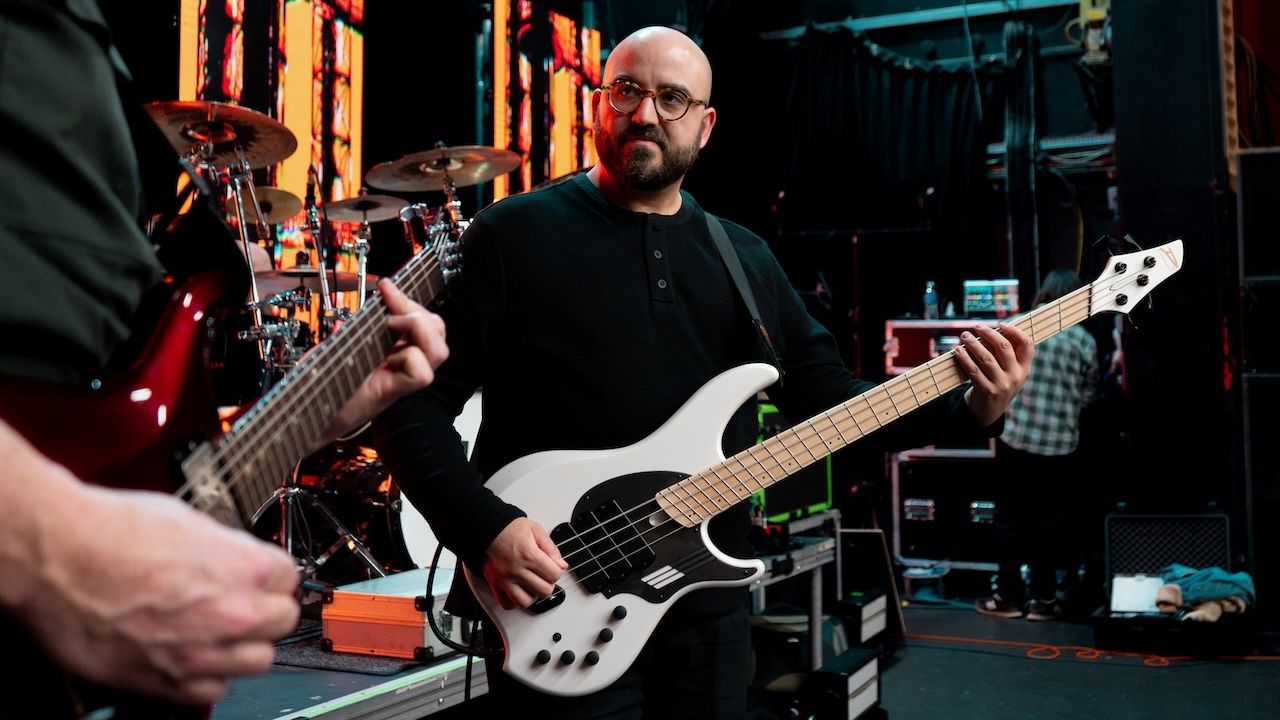
Getgood is also utilizing the latest version of his signature bass. “The most significant change is the addition of neck binding, along with a new bridge that enhances comfort and sound quality. Other details,like matte black hardware and a smaller toggle switch,contribute to its evolution,” he explains. “Each iteration feels more solid while retaining the essence of my original bass.”
“I primarily use the bridge pickup, as it blends better with distorted guitars. While it does sacrifice some low-end, it maintains a tight sound through heavy distortion, allowing for character that complements the guitars,” he elaborates. “Recently, I’ve been experimenting with the bridge and neck pickups wired in parallel for a balanced tone.”
“In live settings, I keep the EQ flat to avoid unexpected changes during performances,” he adds. “I prefer not to rely on an active preamp with sikth, as I want to avoid battery issues, especially since I don’t perform live often.”
Reflecting on his choice of bass, Getgood states, “The dingwall bass addressed a significant need for metal bassists, allowing for low tuning while maintaining coherence across strings. sheldon Dingwall’s Novax fanned-fret system solved this issue, and while I can’t take full credit, I’m proud to have helped popularize it. This model has become somewhat of an industry standard, which is incredibly rewarding.”