Greg Chaisson: From Baseball Dreams to Rock legends
Before establishing himself as a key player alongside Jake E. Lee in Badlands and Red Dragon Cartel,Greg Chaisson almost found his way into Ratt and Ozzy Osbourne’s orbit.Surprisingly, music was never on his radar.”I had no ambitions in music whatsoever,” he recalls. “I was all about baseball.”
Despite his past as an athlete, Chaisson has no regrets about his musical journey, especially when reflecting on iconic albums like 1989’s Badlands and 1991’s Voodoo Highway. “The music speaks volumes,” he asserts. “I remember standing on stage with Badlands, thinking, ‘wow, I’m part of the best band in the world!’”
After Badlands disbanded in the early ’90s, Chaisson transitioned to session work before reuniting with Lee in Red Dragon Cartel. Though, a battle with cancer temporarily halted his career. Thankfully,he has since recovered and is now creating music with his new project,Atomic Kings.
“I wish I hadn’t faced cancer and had to step away from Red dragon Cartel, but it is what it is,” he reflects. “At least I’m still here to share my story. I’m proud of what we’re creating with Atomic Kings. Aside from playing with Jake, I can’t imagine being anywhere else.”
Early Connections: A Friendship with Rob Halford
Chaisson’s first significant band was Surgical Steel,were he formed a friendship with Rob Halford of Judas Priest. “Our guitarist bumped into Rob at a popular club in Phoenix, which had a country bar upstairs and a rock venue downstairs.The next night, Rob came over to watch a boxing match with us,” he shares. “He ended up joining us on stage for some classic Priest tracks, and we hit it off.”
Before the release of Screaming for Vengeance, Halford sent them an advance copy.”We learned Electric eye, screaming for Vengeance, and You’ve Got Another Thing Coming for a show he was attending, planning to play them before Priest did!”
Halford was present when they performed Screaming for Vengeance, and his reaction was priceless. “The crowd whent wild hearing new Priest songs from someone other than Judas Priest. It was a bit cheeky on our part, but we didn’t realize it at the time, and rob never criticized us for it.”
Auditioning for Ozzy: A Missed Opportunity
After playing with Legs Diamond and Steeler, Chaisson auditioned for Ozzy Osbourne. “I tried out for The Ultimate Sin album, but ozzy felt I didn’t fit the MTV image. He was probably right,” he admits. “However, he did compliment my bass playing, saying I was the best of the bunch.”
The audition took place in a Scottish manor with a studio. “We didn’t play any Sabbath or solo Ozzy tracks; we focused on the songs that would make it onto The Ultimate Sin. They had everything written except for Shot in the Dark,which Phil Soussan brought in.”
Chaisson spent 21 days recording, unsure if any of his contributions made it onto the final album.”I was disappointed not to get the gig for the reason Ozzy stated. If they had said I wasn’t good enough, I could have worked on improving. But my image was out of my control.”
Joining Badlands: A Friendship Tested
When Jake E. Lee formed Badlands, he invited Chaisson to audition, which caught him off guard.”I assumed I’d just get the gig because of our friendship. I told him to audition others first, and if he couldn’t find anyone, I’d step in.”
After auditioning around 40 musicians, Jake finally asked, “are you coming down or not?” Chaisson auditioned three times, as he wasn’t the first choice for the band’s vocalist or drummer. “They had someone else in mind, but Jake really wanted me in the band.He didn’t want people thinking I got in just because we were friends.”
Gear and Recording: crafting the Sound of Badlands
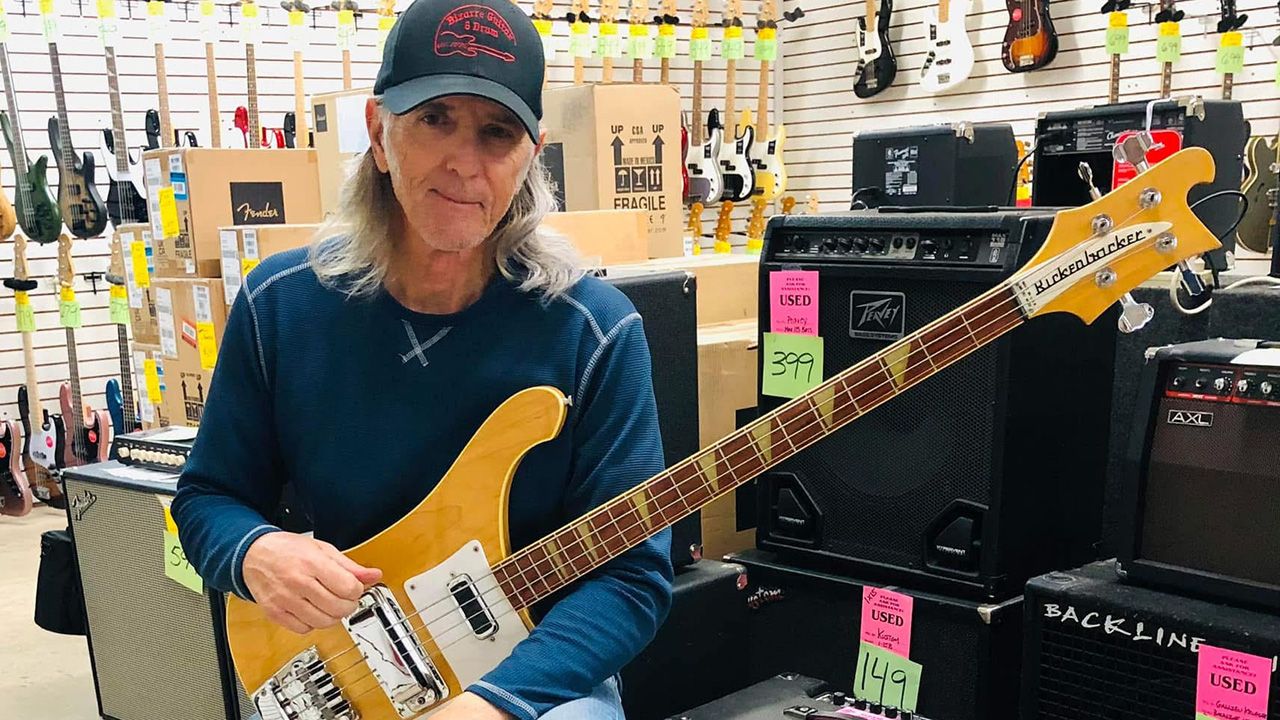
For badlands’ debut, Chaisson used a vintage Ampeg SVT head with an 8×10 cabinet. “The producer, Paul O’Neill, insisted I use a vintage Fender P Bass from the early ’60s, which was a nightmare to keep in tune.I hated it and wanted to use my B.C. Rich, but he wouldn’t allow it.”
When they recorded the second half of the album in New York, Chaisson brought his B.C. Rich. “I told O’Neill I was using my own bass, which sounded and played better. I kept the same amp setup.”
The Making of Voodoo Highway
for their second album, Voodoo Highway, Jake took on the role of producer. “We recorded at Rumbo Recorders, and I thoght we had some fantastic songs,” Chaisson recalls. “I used my Seymour Duncan 800 heads with an 8×10 cabinet and a vintage Ibanez TS-9 Tube Screamer for added grit.”
By then, he had switched to ESP basses, which he still uses today. “I believe both records have stood the test of time.”
The End of badlands: A Shift in the Music Scene
As the musical landscape shifted with the rise of grunge, Badlands faced challenges. ”We could see the writing on the wall with the Seattle scene emerging,” Chaisson reflects. “We also chose the wrong manager. We were about to sign with Larry Mazer but ended up with Paul O’Neill.”
During the recording of their first album, O’Neill suggested firing Jake. “I couldn’t believe it. I told him, ‘You’re going to fire Jake E. Lee from his own band?’” chaisson stood firm, stating he wouldn’t be in the band without Jake. Eventually, O’Neill dropped the idea.
Life After Badlands: A new Chapter
After Badlands disbanded, Chaisson and Lee kept in touch, planning to start a new band. However,as Chaisson prepared to move back to Arizona,those plans fell through.
When Jake formed Red dragon Cartel, he initially didn’t invite Chaisson due to a studio deal. “I would have loved to play on the record, but it wasn’t possible at that time. When they toured,Jake called me to play bass for a show in Tempe,Arizona.”
“I jumped at the chance! We rehearsed, and it felt like old times. after the show, Jake asked me to join the band.”
Health Challenges: A Battle with Cancer
Unluckily, during the tour, Chaisson was unwell, passing out after performances. “I don’t drink, smoke, or do drugs; I’m a fitness enthusiast, so I couldn’t understand what was wrong.”
After a tough period, he was diagnosed with stage four tongue cancer, given onyl ten months to live. “I had to tell jake I was quitting, which was hard as I loved the band and he’s like a brother to me.”
“The treatment was brutal. I lost a significant amount of weight during that time.”
Reconnecting: A Lasting Friendship
Despite the challenges, Chaisson and Lee have remained in touch, often meeting up when they’re in each other’s cities. “We usually don’t even talk about music. We’d be friends irrespective of our musical careers. I’d love to collaborate with him again in the future.”
Current Endeavors: The rise of Atomic Kings
Chaisson’s current project, atomic Kings, previously known as Kings of Dust, released their debut album a couple of years ago and is now working on their second. “Our music has a strong ’70s influence, and I believe we’re a fantastic band,” he shares.
“While we don’t make much money,we perform a handful of shows each year,and the response has been overwhelmingly positive. As long as we’re enjoying ourselves, we’ll keep going.”