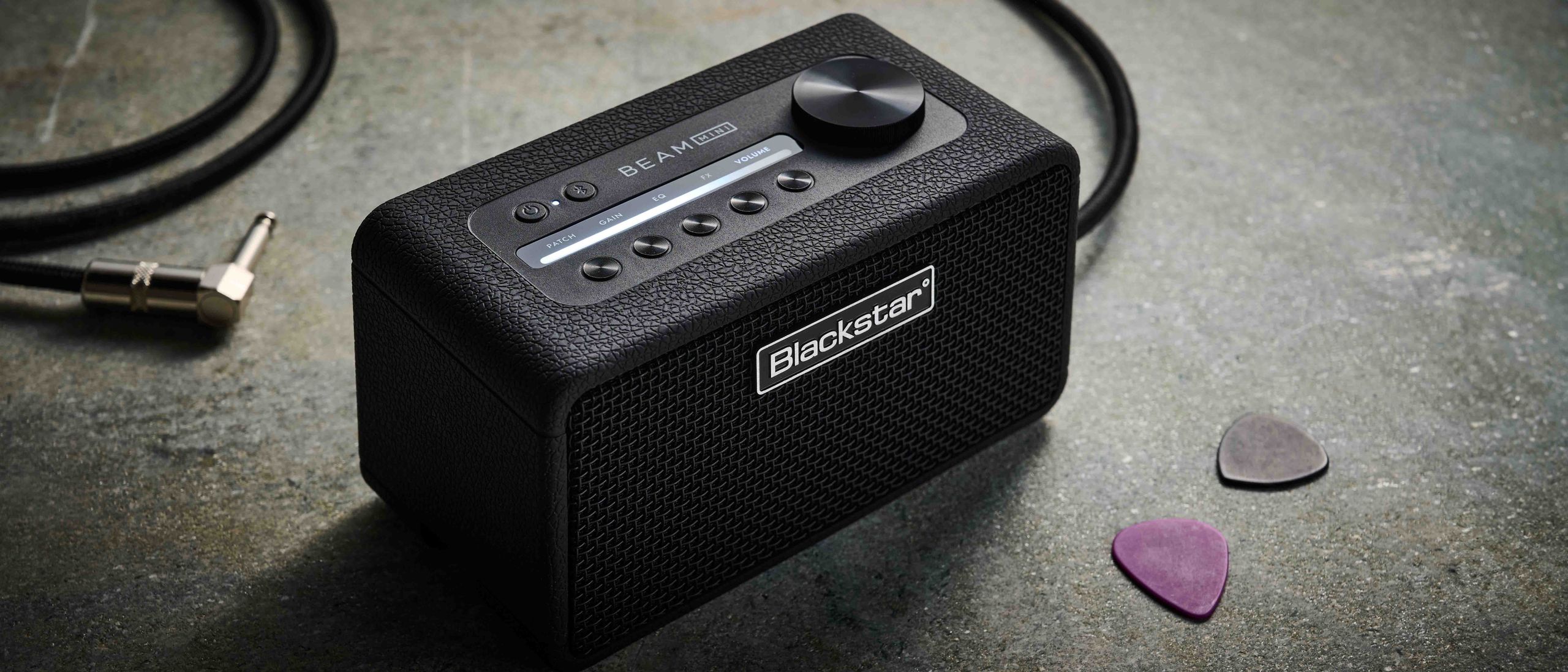
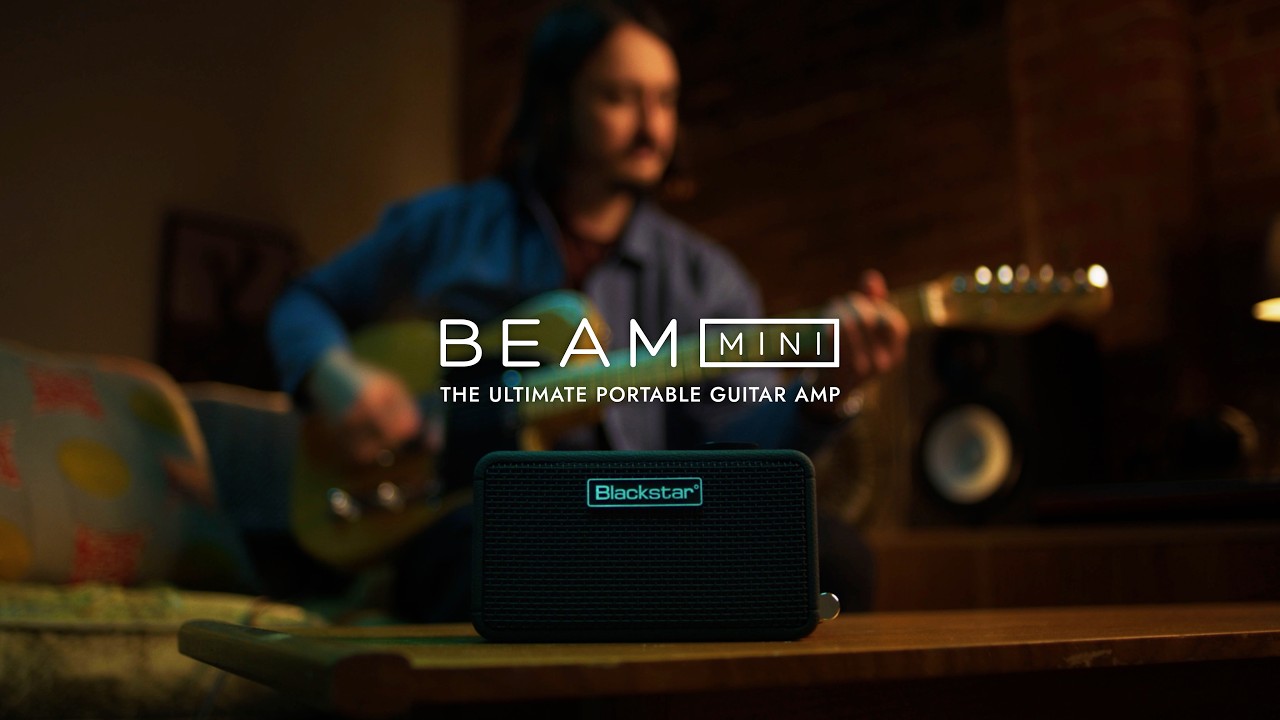
What is the Beam Mini?
When it comes to improving your guitar skills, consistent practise is essential, and having a reliable practice tool at home can make all the difference. Most musicians find themselves playing indoors, so a compact, versatile, and portable amplifier can inspire more frequent playing sessions.This is where mini practice amps come into play. Thes space-saving,neighbor-pleasant devices provide an excellent way to log practice hours without taking up much room,even though thay have historically struggled with sound quality. Fortunately, recent innovations like the Positive Grid Spark Go and Laney Prism Mini have elevated the capabilities of mini amps.
Equipped with two custom two-inch full-range drivers and two passive bass radiators housed in a meticulously tuned cabinet, Blackstar promises impressive performance from the Beam Mini, serving as both a guitar amplifier and a Bluetooth speaker.
In terms of guitar sound, Blackstar has been on a winning streak with products like the ID:X Floor and ID:X combo amps, which feature advanced amp modeling and ‘Cab Rig’ IR-based cabinet simulations, along with mic emulation that exceeds expectations for thier price range.Given this track record, the Beam Mini is an exciting addition to their lineup.
Blackstar has also embraced versatility by allowing the Beam Mini to utilize Tone 3000’s NAM captures, a significant development in the mini amp market.
the Neural Amp Modeler is an open-source initiative that enables musicians to capture their amplifier sounds and share them on the community platform Tone 3000. This project has gained traction in recent years, and Blackstar is the first manufacturer to integrate it directly into an amplifier, granting users access to an extensive libary of tones.
While these features are promising, the market is competitive, with contenders like the JBL Bandbox, Laney Prism Mini, and Positive Grid Spark Go.Let’s see if blackstar can rise to the challenge.
Specifications

- Launch price: $229 | £169 | €169
- Type: Mini practice amplifier
- Origin: Manufactured in China
- Output: 2 x 12W RMS
- Speaker: 2 x 2″ full-range drivers
- Channels: 5 onboard presets
- Controls: Patch, Gain, EQ, FX, Volume, app for detailed editing
- Connectivity: 1/4″ input, USB-C, Bluetooth
- Weight: 733g/1.6lbs
- Dimensions: 5.9″x3.5″x2.9″/150x90x75mm
- Contact: Blackstar
Construction Quality

Build Quality Rating: ★★★★
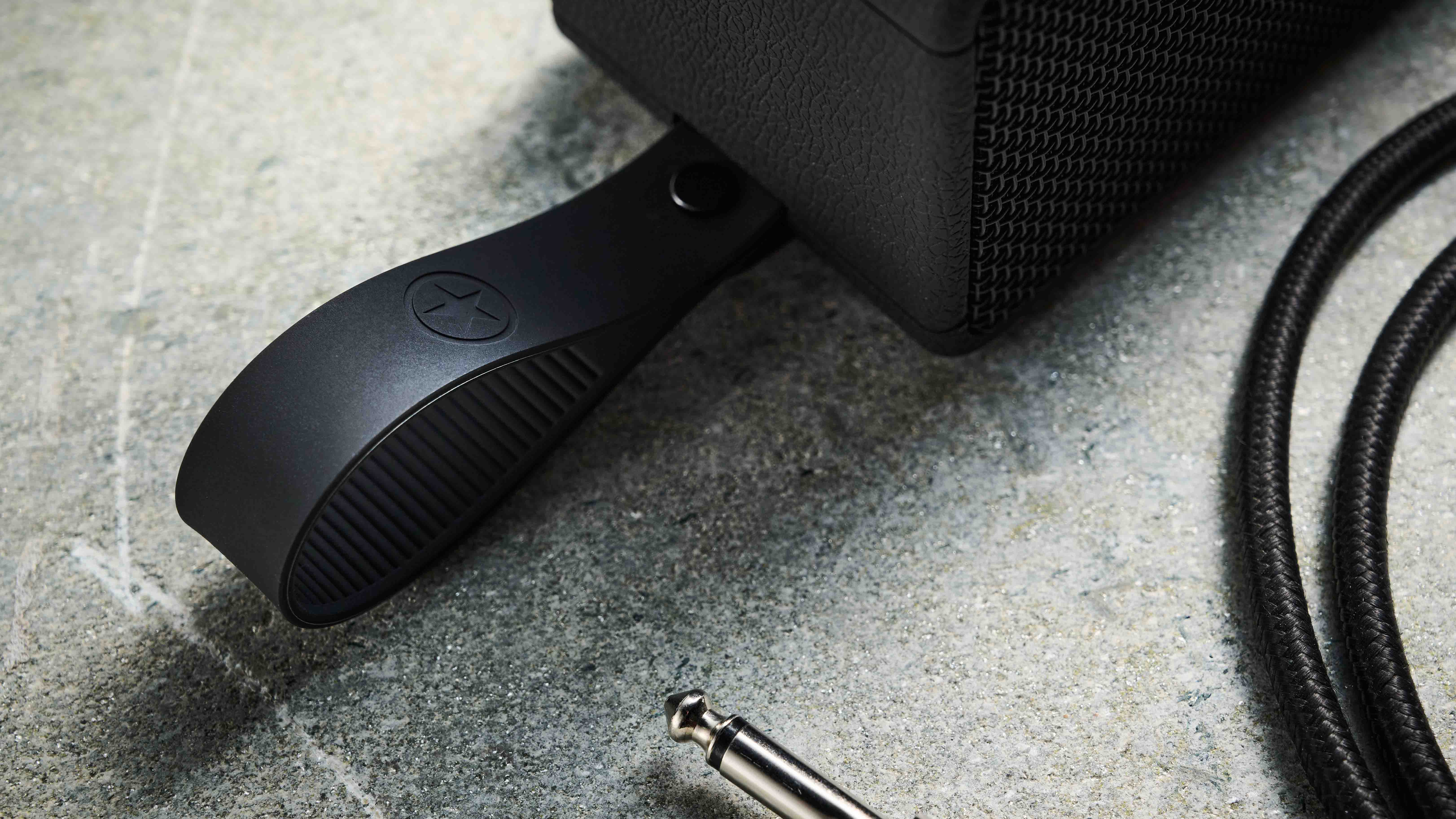
Weighing in at 733g/1.6lbs, the Beam Mini is slightly heavier than anticipated. Though, this added weight provides a reassuring feel. The sides are robust and covered in a soft-touch,textured rubber that not only enhances its premium appearance but also suggests durability for travel in a backpack.
One downside is that this rubberized finish tends to attract dust and debris, so it may be wise to store it in a case while on the go.
The top panel features a rotary control that clicks satisfyingly as it turns, along with a textured surface for grip, contributing to the overall premium feel. Additionally, there are seven buttons-patch, Gain, EQ, FX, Volume, Power, and Bluetooth-each with a soft, rubberized finish that feels high-quality and responsive.

These buttons surround the Light Beam interface, which is bright and easy to read. I’ll delve deeper into its functionality later, but for now, it adds a modern touch to the Beam Mini.
In terms of inputs and outputs, the amp features a 1/4″ instrument input, USB-C connectivity, and a headphone output. While nothing groundbreaking, the placement of the 1/4″ input at the bottom of the right side panel is somewhat unconventional. This design choice has its pros and cons, which we will explore, but it does keep cables neatly tucked away rather than protruding from the top.
the front panel showcases a traditional amplifier design with a mesh grille and the Blackstar logo, rounding out the aesthetic appeal of this compact device.
Functionality and Features

Functionality and Features Rating: ★★★★
Getting started with the Beam Mini is a breeze. Simply plug in your guitar, power it on, and you’re ready to go.However, the side-mounted 1/4″ jack can be a bit awkward, especially if your workspace is cluttered, as it may obstruct your desk space. This could be a minor inconvenience compared to other small amps that risk tipping over due to top-mounted cables. Fortunately,the Beam Mini’s weight mitigates this concern.
To fully utilize the amp’s capabilities, you’ll want to download the Beam mobile app, but even without it, the hardware is user-friendly.
The top panel features five adjustable parameters accessed via the Patch, Gain, EQ, FX, and Volume buttons, along with a large rotary control for adjustments and a single LED strip that forms the ‘Light Beam’ interface, indicating the status of each setting.

The Light Beam interface utilizes animations that vary based on the parameter being adjusted, providing an intuitive and visually appealing way to communicate the amp’s status to the user.
For deeper adjustments or to swap out any amp or effect in the chain, the app is necessary.
As an example, pressing the Patch button causes the LED to narrow and step through five locations on the strip, indicating which patch is currently selected. When adjusting the Volume, the LED fills gradually as the volume increases. This design is quite clever.
However, only one parameter for EQ and FX can be adjusted in this manner. For example, you can only modify the Mix on reverb or the Treble control on the amp’s EQ.
This parameter is fixed, and while it woudl be preferable to customize which parameter is adjustable via the app, the existing options still provide ample flexibility for quick tone adjustments. For more extensive tweaks or to change any amp or effect in the chain, the app will be essential.

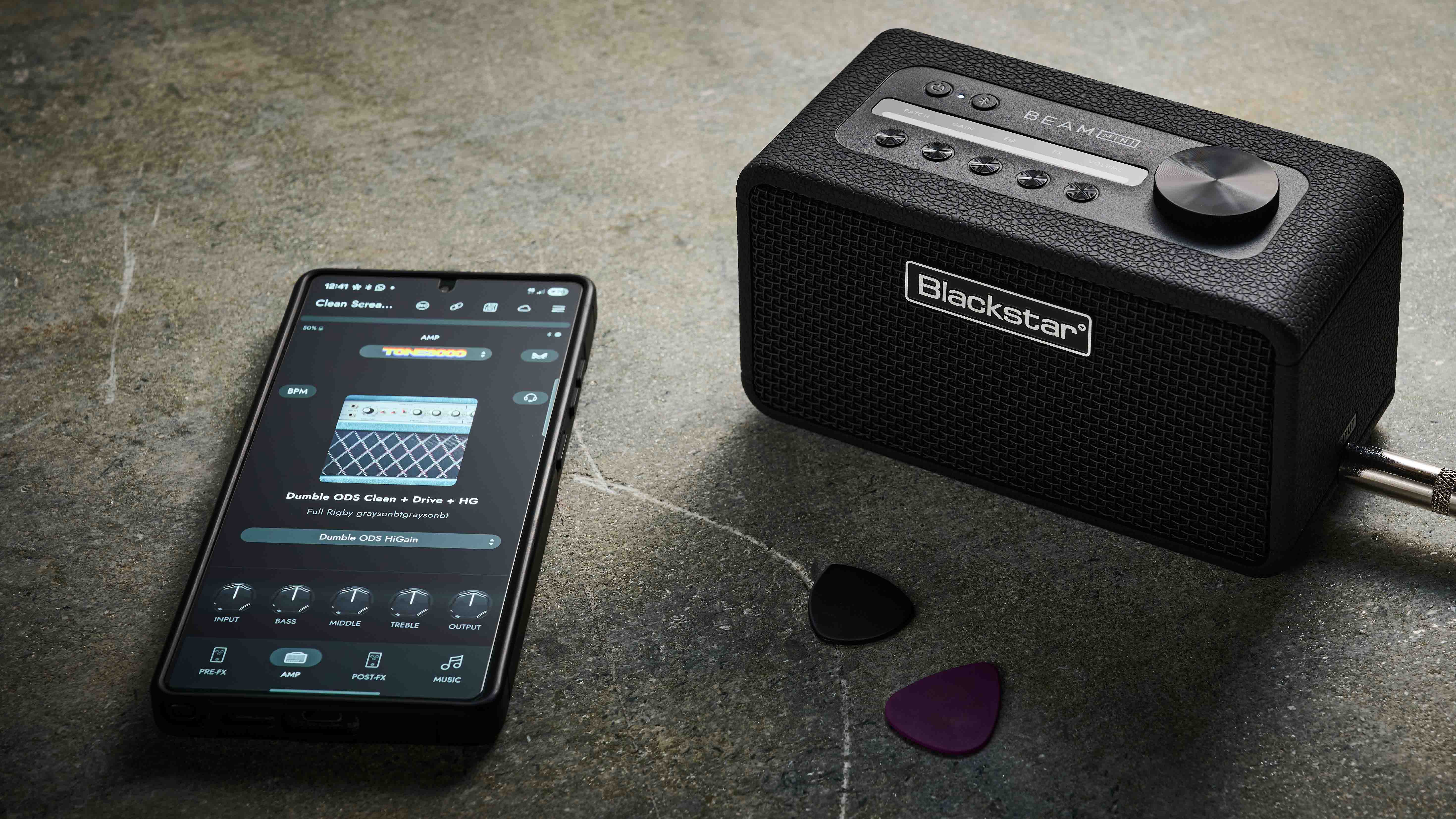
I must admit, I’m feeling a bit overwhelmed by the number of apps available these days. It truly seems like every device has its own app. However, the Blackstar beam Mini app stands out due to its seamless Bluetooth connectivity-just press a button and select the Beam from your device list. The app’s design is visually appealing, featuring artistic representations of the gear rather than cluttered text menus. The signal chain is clearly depicted in sections, preventing details overload, and the controls mimic the tactile experience of physical equipment.
This interface will be familiar to anyone accustomed to using guitar pedals and amplifiers, making it easy to navigate.

One feature that may be new to some users is the Tone 3000 library of NAM captures. NAM, or neural Amp Modeling, is tone 3000’s open-source capture software. We’ll discuss the sound quality later, but for now, it’s worth noting that browsing through the captures is seamlessly integrated into the Beam app, requiring only a quick sign-up to access. It’s straightforward.
The app also includes tools for recording directly to your device via USB, saving new tones to your device or one of the amp’s patches, and uploading your sounds for cloud sharing.
The last tab on the right functions as a built-in media player, offering suggestions from Blackstar for backing tracks, lessons, and drum loops. This is especially useful as I frequently enough use YouTube for similar purposes, making it convenient to have everything in one app.
Sound Quality

Sound Rating: ★★★★
To start,the volume output of the Blackstar Beam Mini is astonishing for its size. As a practice amp, it exceeds expectations, and as a Bluetooth speaker, it can easily fill an average-sized room.
As a speaker, it is nothing short of impressive.
When streaming music from my phone, the bass response is particularly noteworthy. The passive bass radiators are effective, and I often find myself wanting to reduce the low end. The mids and highs are well-balanced without being harsh, making it an impressive speaker, which bodes well for its guitar tones.
My previous experiences with Blackstar’s modeling range, particularly the ID:X Floor, have taught me to appreciate their capabilities. The Beam Mini offers models of Blackstar’s St James (OD, Crunch, and Clean), Artisan 30, HT Club 50 MKII, and Series One MKII amplifiers, along with six Ampton models that replicate everything from a clean Fender Twin (Ampton Twin) to the aggressive distortion of a Peavey 5150 (Ampton 6l6).
Additionally,there are Classic,Modern,and Flat bass preamps,as well as an acoustic preamp.
the tones are incredibly inspiring. I’m particularly drawn to the ‘Clean’ and ‘OD’ models of the St James amp. The clean tone delivers beautiful overtones with a solid low end, creating a lively sound. The OD model provides a heavier distortion suitable for classic rock, maintaining clarity and a tight low end.
for heavier genres,the Series One model excels,offering a thicker low end for chugging riffs and ample gain.

While I’m not as fond of the Crunch version of the St James model due to its slightly brittle high end, the HT Club 50 provides a rich overdrive perfect for classic rock rhythms.
The Ampton models are also noteworthy, particularly the Ampton 800, which unmistakably captures the Marshall high-end. The Ampton Twin, though, doesn’t quite deliver the vibrancy I expect from a Twin model, even though it does feature a pleasant mid-scoop.
What stands out most is how well the amps respond to volume adjustments.
All of these models come equipped with the full range of controls and switches typical of the amplifiers they emulate. This includes Blackstar’s ISF control,which allows users to toggle between ‘American’ and ‘British’ tonal characteristics,providing a versatile array of sounds.
What truly impresses is how the amps clean up when adjusting the volume.many budget modeling amps struggle in this area, but models like the St James EL34 can produce a chime-like clean tone from a driven sound, allowing players to control the amount of grit simply by adjusting the volume knob.

However, the amp models are just part of the story; the cab simulation is equally important. Blackstar employs its innovative IR-based cabrig technology in this area.
Users can choose from six Blackstar cabinets, including open and closed-back versions of 1×12″ and 2×12″, and also modern and vintage 4×12″ options. The standout feature is Blackstar’s ”In The Room” technology, which aims to recreate the natural perception of tone and feel in a physical space rather than simply modeling a microphone.
While you can add a dynamic, condenser, or ribbon mic, these options sound somewhat brittle compared to the In The Room mode.
This technology truly works. The tone has a low-mid presence that feels more like standing in front of a cabinet rather than hearing it through a mic, and it avoids the harsh high-end often associated with digital modelers. it’s a genuinely enjoyable experience.
While you can add a dynamic,condenser,or ribbon mic,these options sound somewhat brittle compared to the In The Room mode,which is reminiscent of the digital artifacts frequently enough criticized in modeled guitar tones. In short, stick with the In The Room mode for the best results.

Additionally, the technology includes a room control feature that allows you to introduce ambient sound, adding a rewarding spatial quality to the tone.
Regarding effects, the Beam Mini offers a suite of 28 options covering various drive, utility, ambient, and modulation needs. There are three Pre-FX slots for Gate, Filter/Comp, and Drive/Fuzz, and three Post-FX slots for Modulation, Delay, and Reverb.
These effects are chained in that specific order and cannot be rearranged,which may limit flexibility compared to the more customizable signal chains found in devices like the Laney Prism Mini.
Many of the effects are enjoyable to use, such as the Envelope Filter, which responds well to my picking dynamics and is easily adjustable with three simple controls.The Pie Fuzz effectively captures that thick Big Muff sound, while the Hall Reverb adds a subtle ambiance without overpowering the dry signal.

While many effects are impressive, a few, such as the TS Drive (Tube Screamer) and K Drive (Klon), fall short when used alone, sounding a bit thin. However, they work well for enhancing an already overdriven amplifier. Additionally, achieving the desired spring reverb for that classic surf sound can be challenging.
Next, we should discuss the Tone 3000 NAM amp captures. As with all capture technologies, the quality relies heavily on the person capturing the sound; the amplifier must be properly set up, mic’d, and recorded to achieve optimal results. The exciting aspect here is that the software is entirely free, offering thousands of captures, making its integration into the Beam Mini a significant advantage.
This could be a groundbreaking year for Tone 3000.
As I explored various tones, the results were mixed. Generally, I noticed a slightly digital high end compared to Blackstar’s native modeling. Though, I found an excellent capture of a Roland Jazz Chorus that produced lush cleans, and also a JCM800 boosted by a Klon into a 4×12 cabinet that delivered a massive Marshall overdrive.
Conversely, some captures were less impressive, such as a 1977 Fender Super Reverb that exhibited an odd underlying distortion and felt somewhat lifeless.
As was to be expected, you may need to sift through various options to find the best Tone 3000 captures. Still, this emerging software, integrated into the amp, is rapidly gaining popularity and is wholly free to download and create captures with.
its inclusion in the Blackstar Beam Mini is a welcome feature, and it truly seems like an exciting year ahead for Tone 3000. Though, it’s critically important to note that currently, you cannot place any of the Beam Mini’s drives in front of the NAM captures, but a future update from Blackstar may address this limitation.
Conclusion

the Blackstar Beam Mini represents a significant advancement in the realm of mini guitar amplifiers. It boasts impressive low-end response for its size, an intuitive app that balances depth with user-friendliness, a clever top-panel interface, and astonishing volume levels for such a compact device.
However, it’s the combination of high-quality amp modeling and exceptional speakers that truly sets the Beam Mini apart in its category. The sounds produced are genuinely enjoyable, not just for a small amp, but as guitar tones in their own right.
Priced at approximately $229, it is more expensive than competitors like the Positive Grid Spark Go, but the quality of tones justifies the investment. The primary drawback is that to fully utilize its capabilities, you will need to rely on the app.
Of all the mini practice amps I’ve tested, this is undoubtedly my favorite.
It’s also worth noting the exciting future prospects for this amp, as an upcoming integration of a live version of Moises will allow users to separate stems from audio streamed via Bluetooth. We got a sneak preview of this feature, and it is indeed thrilling. Stay tuned, as we will update this review when it becomes available later this year.
As it stands, among all the mini practice amps I’ve encountered, the Blackstar Beam Mini is easily my top choice. The competition is fierce, but Blackstar has truly excelled.
Guitar World Verdict: with impressive sound quality from such a compact unit, mini guitar amplification has reached a new level, and competitors will need to catch up. The Blackstar Beam Mini is an excellent choice for anyone seeking a new practice amp.
|
Test |
Results |
score |
|---|---|---|
|
Build Quality |
Offers reassuring weight,though the textured finish can attract dirt. |
★★★★ |
|
Usability and features |
Intuitive light beam interface and user-friendly app,though the app is essential for advanced adjustments. |
★★★★ |
|
Sound Quality |
Exceptional amp tones, but some effects don’t quite meet the same high standard. |
★★★★ |
|
Overall |
Undoubtedly the best mini guitar amp currently available, with more features on the horizon. |
★★★★ |
Also Consider
Hands-On Videos
Thomann
Watch On
While many effects are impressive, a few, such as the TS Drive (Tube Screamer) and K Drive (Klon), fall short when used alone, sounding a bit thin.However, they work well for enhancing an already overdriven amplifier. Additionally,achieving the desired spring reverb for that classic surf sound can be challenging.
Next, we should discuss the Tone 3000 NAM amp captures. As with all capture technologies, the quality relies heavily on the person capturing the sound; the amplifier must be properly set up, mic’d, and recorded to achieve optimal results. The exciting aspect here is that the software is entirely free, offering thousands of captures, making its integration into the Beam Mini a significant advantage.
This could be a groundbreaking year for Tone 3000.
As I explored various tones,the results were mixed. Generally, I noticed a slightly digital high end compared to Blackstar’s native modeling.Though, I found an excellent capture of a Roland Jazz Chorus that produced lush cleans, and also a JCM800 boosted by a Klon into a 4×12 cabinet that delivered a massive Marshall overdrive.
Conversely, some captures were less impressive, such as a 1977 Fender Super Reverb that exhibited an odd underlying distortion and felt somewhat lifeless.
As was to be expected, you may need to sift through various options to find the best Tone 3000 captures. Nevertheless, this emerging software, integrated into the amp, is rapidly gaining popularity and is completely free to download and create captures with.
Its inclusion in the Blackstar Beam Mini is a welcome feature, and it seems like an exciting year ahead for Tone 3000. However, it’s important to note that currently, you cannot place any of the Beam Mini’s drives in front of the NAM captures, but a future update from Blackstar may address this limitation.
Conclusion
the Blackstar beam Mini represents a significant advancement in the realm of mini guitar amplifiers. It boasts impressive low-end response for its size, an intuitive app that balances depth with user-friendliness, a clever top-panel interface, and astonishing volume levels for such a compact device.
Though, it’s the combination of high-quality amp modeling and exceptional speakers that truly sets the Beam Mini apart in its category. the sounds produced are genuinely enjoyable, not just for a small amp, but as guitar tones in their own right.
Priced at approximately $229, it is more expensive than competitors like the Positive Grid Spark Go, but the quality of tones justifies the investment. The primary drawback is that to fully utilize its capabilities, you will need to rely on the app.
Of all the mini practice amps I’ve tested, this is undoubtedly my favorite.
It’s also worth noting the exciting future prospects for this amp, as an upcoming integration of a live version of moises will allow users to separate stems from audio streamed via Bluetooth. we got a sneak preview of this feature, and it is indeed indeed thrilling.Stay tuned, as we will update this review when it becomes available later this year.
as it stands, among all the mini practice amps I’ve encountered, the Blackstar Beam mini is easily my top choice. The competition is fierce, but Blackstar has truly excelled.
Guitar World Verdict: With impressive sound quality from such a compact unit,mini guitar amplification has reached a new level,and competitors will need to catch up.The Blackstar Beam Mini is an excellent choice for anyone seeking a new practice amp.
|
Test |
Results |
Score |
|---|---|---|
|
Build Quality |
Offers reassuring weight, though the textured finish can attract dirt. |
★★★★ |
|
Usability and Features |
Intuitive light beam interface and user-friendly app, though the app is essential for advanced adjustments. |
★★★★ |
|
Sound Quality |
Exceptional amp tones, but some effects don’t quite meet the same high standard. |
★★★★ |
|
overall |
Undoubtedly the best mini guitar amp currently available, with more features on the horizon. |
★★★★ |
Also Consider
Hands-On Videos
Thomann
Watch On