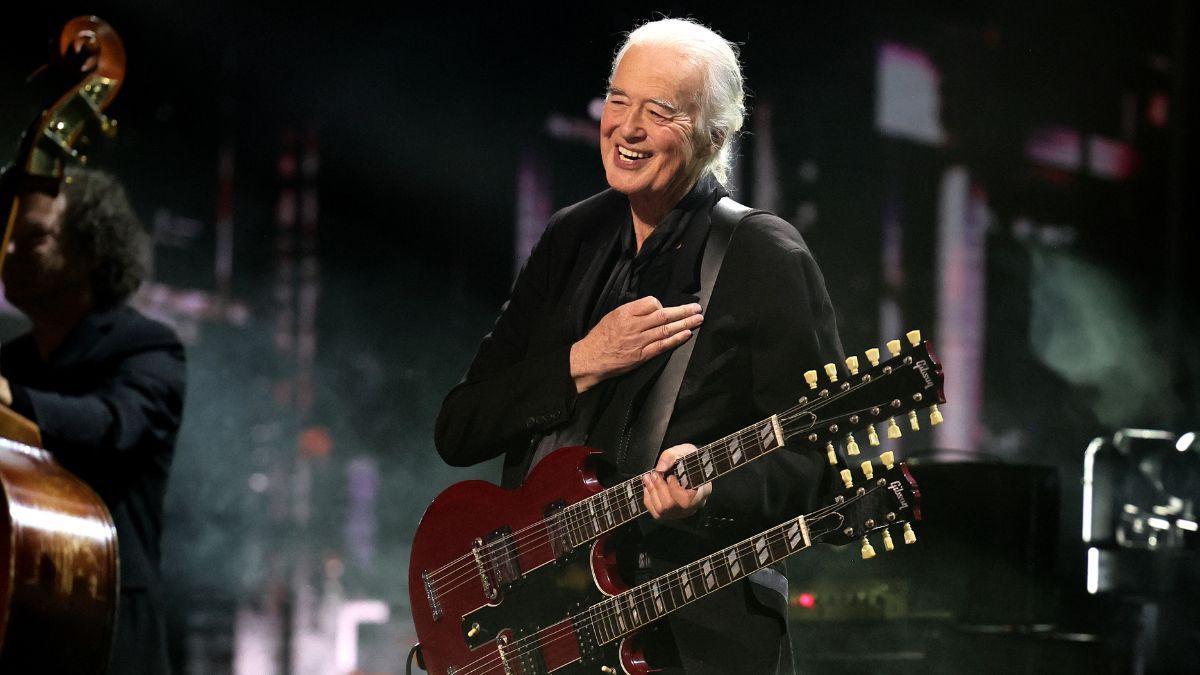
Jimmy Page Strikes a Chord: How AI Can't Capture the Soul of Music Behind Iconic Riffs!
0 reactions
1 year ago
Beatbounty
Jimmy Page Speaks Out: The Threat of AI in Music adn the Arts
Legendary guitarist Jimmy Page has voiced his concerns regarding the role of Artificial Intelligence in the music industry, notably in light of recent proposals from the UK Government.
His fervent remarks highlight the potential risks that AI poses to the creative landscape as the UK Government concludes its public consultation on the Data (Use and Access) Bill.
Initiated in October 2024, this bill aims to establish a legal framework governing AI’s use, which has advanced to the point where it can generate music that closely resembles the styles of established artists almost instantaneously. This development raises significant issues for an industry that contributes approximately £7.6 billion (around $9.6 billion) to the UK economy annually.
Controversial Proposals: An Opt-Out System for Artists
The UK Government’s proposal introduces an opt-out mechanism,permitting AI to utilize existing music for its learning and creative processes unless artists explicitly refuse.This approach contrasts sharply with the current opt-in system that governs personal data processing, such as for email subscriptions.
Page argues that this framework is fundamentally flawed. Drawing from his extensive experience as a session musician before forming Led Zeppelin, he states, “In my early career, I was tasked with generating riffs and lyrical ideas on the spot, maintaining the flow of recording alongside fellow musicians and artists.”
He continues, “The journey from being an anonymous session player to performing on global stages with Led Zeppelin was not driven by algorithms or data. The magic that turns a distinctive riff into an anthem is embedded in the band’s collective spirit—a synergy that no machine can replicate.”
The Essence of True artistry
Page elaborates, “As AI attempts to imitate and commercialize creativity, we find ourselves at a pivotal moment. AI-generated art and music, derived from existing human creations, lack the raw emotional depth that comes from genuine experiences.They are mere shadows, stripped of the struggles, victories, and soul that characterize authentic artistry.”
(Image credit: Gibson)
Ethical Concerns and the Need for Protection
He also addresses the significant ethical dilemmas posed by AI. “When AI harvests the rich tapestry of human creativity to produce content,” Page asserts, “it frequently enough dose so without consent, recognition, or fair compensation. This is not progress; it’s exploitation.”
Though, page’s message is not solely pessimistic; he advocates for proactive measures. He urges the UK Government to implement policies that protect artists, ensuring their work is not appropriated by machine learning without proper consideration.
He concludes,“By doing this,we not only protect the rights of artists but also preserve the very essence of our cultural legacy.”
The Divided Landscape of AI in Music
The topic of AI continues to polarize the music industry. Some artists, like Alex Van Halen, are eager to harness AI to recreate authentic-sounding solos reminiscent of Eddie van Halen, while producer Eddie Kramer has suggested using AI to enhance the legacy of Jimi Hendrix.
These developments follow the surviving members of The Beatles utilizing AI to produce a new track,which even garnered a Grammy award.
In contrast, over 1,000 British musicians have united to release a silent album titled This is What We Want? in protest against AI’s use of their work.
Paul mccartney, who has experienced both the advantages and drawbacks of AI, has supported the movement, cautioning that proposed legislative changes could lead to a “Wild west” scenario where artists’ copyrights are inadequately safeguarded. “Young creators deserve ownership of their beautiful songs,” he remarked. “If legislation is being drafted, it must prioritize the protection of creative minds, or we risk losing them.”
On a positive note, AI has also introduced innovative technologies in the guitar realm, such as Positive Grid’s Spark 2 amp, which employs AI to generate guitar tones based on user prompts, and an auto-generating AI overdrive pedal that has caught the attention of many. Experienced instructors have touted the potential of AI in guitar education as “immense.”
For those interested, you can read Jimmy Page’s full statement below.
Jimmy Page Strikes a Chord: How AI Can’t Capture the Soul of Music Behind Iconic Riffs!
Jimmy page Strikes a Chord: How AI can’t Capture the Soul of Music Behind Iconic Riffs!
In the ever-evolving landscape of music, the emergence of Artificial Intelligence (AI) has sparked intense debate among artists, producers, and fans alike. Legendary guitarist Jimmy Page, known for his iconic riffs with Led Zeppelin, has been vocal about the limitations of AI in replicating the essence of music. This article delves into Page’s viewpoint, the implications of AI in music, and why the soul of artistry remains uniquely human.
The Rise of AI in Music
AI technology has made significant strides in recent years, enabling machines to compose music, generate lyrics, and even mimic the styles of famous artists. With tools like OpenAI’s MuseNet and Google’s Magenta, the ability to create music has never been more accessible. However, this technological advancement raises critical questions about authenticity and creativity.
Understanding AI’s Capabilities
AI can analyze vast amounts of data, learning from existing music to produce new compositions. here are some key capabilities of AI in music:
Music Composition: AI can generate melodies and harmonies based on learned patterns.
Lyric Generation: Algorithms can create lyrics that mimic the style of popular songs.
Style Imitation: AI can replicate the sound of specific artists or genres.
Jimmy Page’s Perspective on AI
Jimmy Page has expressed his concerns about AI’s role in music creation, emphasizing that technology cannot replicate the emotional depth and lived experiences that define true artistry. He argues that:
AI Lacks emotional Depth: while AI can produce technically sound music, it cannot convey the emotions and stories behind a song.
Creativity is Human: The creative process involves personal experiences, struggles, and triumphs that AI cannot emulate.
Music is a Collective Experience: The synergy between musicians during live performances creates a unique energy that AI cannot replicate.
Case Study: The Creation of Iconic Riffs
To illustrate Page’s point, let’s examine the creation of some of Led Zeppelin’s most iconic riffs:
Song
Iconic Riff
Emotional Context
Stairway to Heaven
Acoustic intro
Journey of self-revelation
Whole Lotta Love
Heavy Guitar Riff
Passion and desire
Kashmir
Orchestral Riff
Epic adventure
Each of thes riffs was born from Page’s personal experiences and emotions, showcasing the human element that AI simply cannot replicate.
the Limitations of AI in Music Creation
While AI can produce music that sounds good on the surface, it lacks the following:
1. Authenticity
AI-generated music often feels formulaic and lacks the authenticity that comes from human creativity.The nuances of a musician’s style, influenced by their background and experiences, cannot be captured by algorithms.
2. Emotional Resonance
Music is a powerful medium for expressing emotions. AI may generate melodies, but it cannot infuse them with the emotional weight that comes from personal experiences. Listeners connect with music that resonates on a deeper level, something AI struggles to achieve.
3. Cultural Context
Music is often a reflection of cultural and societal influences. AI lacks the ability to understand and interpret these contexts, leading to compositions that may miss the mark in terms of relevance and impact.
Benefits of Human Creativity in Music
Human musicians bring unique benefits to the music industry that AI cannot replicate:
Personal Connection: Artists share their stories and emotions through their music, creating a bond with their audience.
Innovation: Human creativity leads to new genres,styles,and trends that push the boundaries of music.
Collaboration: The collaborative nature of music-making fosters innovation and diversity in sound.
Practical Tips for Musicians in the Age of AI
As AI continues to evolve, musicians can adapt and thrive by embracing their unique qualities:
1. Emphasize Authenticity
Focus on creating music that reflects your personal experiences and emotions. Authenticity resonates with listeners and sets you apart from AI-generated content.
2. Collaborate with Other Artists
Engage in collaborations to explore new ideas and sounds. Working with other musicians can lead to innovative creations that AI cannot replicate.
3. Leverage Technology Wisely
Use AI tools as a supplement to your creativity, not a replacement. AI can assist in generating ideas, but the final product should always reflect your artistic vision.
First-Hand Experience: Musicians Speak Out
Many musicians have shared their thoughts on AI’s impact on the industry. Here are a few notable quotes:
“AI can create music, but it will never understand the heart and soul behind it.” – John Mayer
“The beauty of music lies in it’s imperfections, something AI will never grasp.” – Taylor swift
Join the Conversation on Beatbounty
As the music industry navigates the complexities of AI, it’s essential for artists and fans to engage in discussions about the future of creativity. Join the Beatbounty platform to connect with fellow musicians, share your thoughts, and submit ads to promote your work.Create an account today and be part of the evolving music landscape!