Strumming Through Time: Celebrating 75 Years of the Iconic Fender Telecaster
0 reactions
3 months ago
Beatbounty
It’s hard to believe that teh Fender Telecaster, originally known as the Broadcaster, made its grand entrance at the NAMM Show in 1950. Over the past 75 years, its meaning in the music world has only intensified.
The enduring appeal of the Telecaster lies in its straightforward design, allowing musicians to infuse their unique style into the instrument, ensuring it remains timeless.
initially crafted for country musicians in California, the Telecaster has transformed into a versatile tool for artists across genres-from rock and metal to jazz and pop. While trends may come and go, the Telecaster’s basic utility keeps it relevant.
In this article, we delve into the Telecaster’s technical advancements, highlight some of the most sought-after vintage models that have defined its legacy, and explore the latest versions of what many still regard as the ultimate electric guitar.
The Early Development
In 1943, leo Fender and his future partner, Doc Kauffman, created their first lap steel guitar and filed a patent for a pickup design the following year. This instrument, known as the ‘Radio Shop guitar’, paved the way for more sophisticated lap steels. By the summer of 1949, Leo had crafted his first six-string guitar prototype.
This prototype featured a two-piece laminated pine body that closely resembled the production models, complete with a bolt-on neck and a top-mounted metal control plate.
Interestingly, the headstock design was a three-per-side ‘snake head’ style, reminiscent of Fender’s lap steels. By late 1949, Leo had refined the design, introducing the now-iconic headstock shape and a unique set of Kluson tuners.
The Launch of Production
Fender’s first production guitars emerged in the spring of 1950, branded as the ‘Esquire’. Today, the Esquire is recognized as a single-pickup version of the Telecaster, but shortly after its introduction, Fender began offering models with an optional neck pickup.
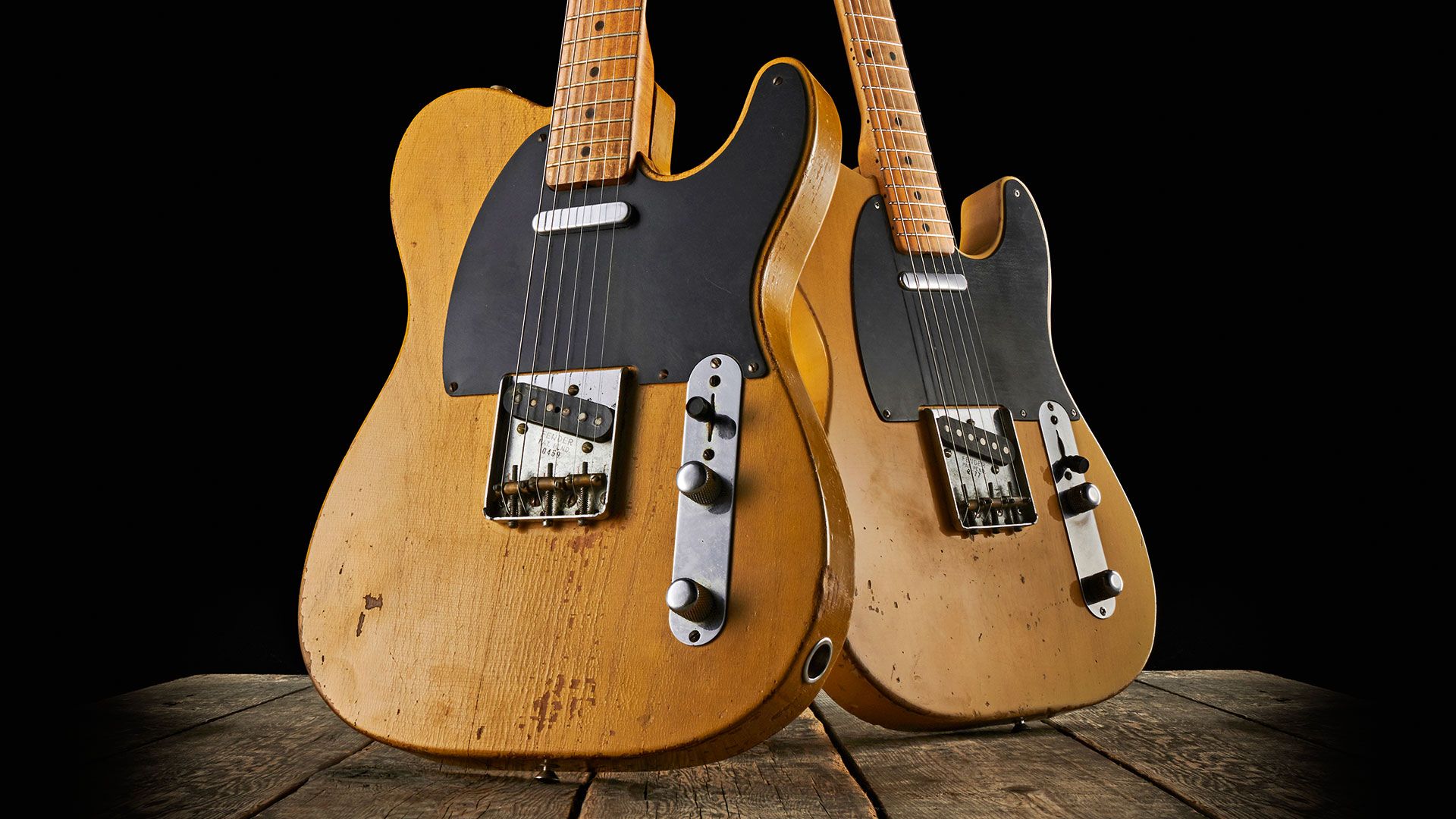
the initial models featured black lacquered pine bodies and white pickguards. By summer, Fender transitioned to ash bodies with a translucent blonde finish, complemented by contrasting black pickguards.
Fender’s production process evolved, as they realized that spraying lacquer on the unseen sides of the pickguards was wasteful. They adapted by placing the guards on a paint tin for spraying, resulting in a distinctive circular lacquer ‘shadow’. This ’Blackguard’ era lasted from 1950 to 1954.
Design Challenges
Initially, Leo Fender believed that thick maple necks would withstand string tension without warping. However, feedback from touring musicians revealed issues with neck flexing due to varying climates, leading to inconsistent string action. In response, Leo invested in truss rod tooling in October 1950 to address thes concerns.
Branding Evolution
Production of the Esquire was halted between late summer 1950 and January 1951, during which Don Randall proposed the name ‘Broadcaster’ for the dual-pickup model. When production resumed, the Esquire name was reserved for single-pickup guitars.
According to Nacho Baños in his book The Blackguard, only about 250 Broadcasters were produced between October 1950 and February 1951. Following a trademark dispute with Gretsch, Fender removed the ‘Broadcaster’ label from remaining decals, leading to the creation of the ‘Nocaster’ designation. Once those decals were weary, Fender introduced the ‘Telecaster’ name, which first appeared in late summer 1951.
the Allure of vintage Models
Vintage models like the Broadcaster, ‘Nocaster’, and early Telecasters remain highly coveted among collectors. We spoke with session guitarist Eddie Tatton and rockabilly artist James Oliver to gain insights into their prized instruments.
“I found a ’52 model at ATB [a guitar shop in Melksham, England],” Tatton shares. “It was reasonably priced because it’s an Esquire with a factory-added neck pickup. GE Smith has a similar one, and Fender charged around $15 for the upgrade. It’s an unbelievable working instrument and my favorite guitar.”
Oliver’s ’54 Telecaster is also a favorite, serving as his primary gigging guitar for the past three years. ”Although it’s been refinished, the parts are original and it’s quiet lightweight,” he explains. “The bridge pickup failed while I was touring Scandinavia, so I completed the tour using just the neck pickup.”
Evolution of Body Construction
Throughout the vintage era, body construction saw important changes. initially,Fender drilled a hole from the neck pocket to the bridge pickup cavity to route the neck pickup wires.This method was cumbersome, requiring the removal of strings and the bridge for maintenance.
As the Broadcaster production progressed, Fender introduced a ’doughnut rout’-a one-inch hole between the two pickup cavities. This allowed for a more efficient wiring process, with a diagonal hole connecting the doughnut to the control cavity. By this time, Fender also began notching between the neck pocket and neck pickup rout.
It’s hard to fathom that the Fender Telecaster, originally introduced as the Broadcaster, made its first appearance at the NAMM show in 1950. Over the last 75 years, its significance in the music industry has only amplified.
The Telecaster’s enduring charm can be attributed to its straightforward design, allowing musicians to infuse their personal touch into the instrument, ensuring it remains perpetually in vogue.
Initially designed for country artists in California, the Telecaster has evolved into a versatile instrument embraced by musicians across various genres-from rock and metal to jazz and pop. While trends may come and go, the Telecaster’s fundamental utility keeps it relevant.
This article explores the technical advancements of the Telecaster, highlights some of the most sought-after vintage models that have shaped its legacy, and examines the latest iterations of what many still consider the ultimate electric guitar.
The Genesis of the Telecaster
In 1943, Leo Fender and his future partner, Doc Kauffman, crafted their first lap steel guitar and filed a patent for a pickup design the following year. This instrument, known as the ‘Radio Shop guitar’, laid the groundwork for more sophisticated lap steels. By the summer of 1949, Leo had developed his first six-string guitar prototype.
This prototype featured a two-piece laminated pine body that closely resembled the production models, complete with a bolt-on neck and a top-mounted metal control plate.
Interestingly, the headstock design was a three-per-side ‘snake head’ style, reminiscent of Fender’s lap steels. By late 1949, leo had refined the design, introducing the now-iconic headstock shape and a unique set of Kluson tuners.
The Start of Production
Fender’s first production guitars emerged in the spring of 1950, branded as the ‘Esquire’. Today, the Esquire is recognized as a single-pickup version of the Telecaster, but shortly after its introduction, Fender began offering models with an optional neck pickup.
The initial models featured black lacquered pine bodies and white pickguards. by summer, Fender transitioned to ash bodies with a translucent blonde finish, complemented by contrasting black pickguards.
Fender’s production process evolved, as they realized that spraying lacquer on the unseen sides of the pickguards was wasteful. They adapted by placing the guards on a paint tin for spraying,resulting in a distinctive circular lacquer ‘shadow’. This ‘Blackguard’ era lasted from 1950 to 1954.
Design Challenges and Innovations
Initially, leo Fender believed that thick maple necks would withstand string tension without warping. However, feedback from touring musicians revealed issues with neck flexing due to varying climates, leading to inconsistent string action. In response, Leo invested in truss rod tooling in October 1950 to address these concerns.
The Evolution of Branding
Production of the Esquire was halted between late summer 1950 and January 1951, during which Don Randall proposed the name ‘Broadcaster’ for the dual-pickup model. When production resumed, the Esquire name was reserved for single-pickup guitars.
According to Nacho Baños in his book The Blackguard, only about 250 Broadcasters were produced between October 1950 and February 1951. Following a trademark dispute with Gretsch, Fender removed the ‘Broadcaster’ label from remaining decals, leading to the creation of the ‘Nocaster’ designation. Once those decals were exhausted, Fender introduced the ‘Telecaster’ name, which first appeared in late summer 1951.
The Allure of Vintage Models
Vintage models like the Broadcaster, ‘Nocaster’, and early Telecasters remain highly coveted among collectors. We spoke with session guitarist eddie Tatton and rockabilly artist James Oliver to gain insights into their prized instruments.
“I found a ’52 model at ATB [a guitar shop in Melksham, England],” Tatton shares. “it was reasonably priced because it’s an Esquire with a factory-added neck pickup. GE Smith has a similar one, and Fender charged around $15 for the upgrade. It’s an incredible working instrument and my favorite guitar.”
Oliver’s ’54 Telecaster is also a favorite, serving as his primary gigging guitar for the past three years. “Although it’s been refinished, the parts are original and it’s quite lightweight,” he explains.”The bridge pickup failed while I was touring Scandinavia, so I completed the tour using just the neck pickup.”
Evolution of Body Construction
Throughout the vintage era, body construction saw significant changes. Initially, Fender drilled a hole from the neck pocket to the bridge pickup cavity to route the neck pickup wires.This method was cumbersome, requiring the removal of strings and the bridge for maintenance.
as the Broadcaster production progressed, Fender introduced a ‘doughnut rout’-a one-inch hole between the two pickup cavities. this allowed for a more efficient wiring process, with a diagonal hole connecting the doughnut to the control cavity. By this time, Fender also began notching between the neck pocket and neck pickup rout.
Fender eventually settled on a diagonally routed channel connecting the neck pickup and control cavities by drilled holes. This lasted until 1968, when the company began drilling the wire channel from the corner of the neck pocket through to the control cavity, catching the treble side of the neck pickup cavity along the way.
Fender routing templates were pinned onto body blanks, and the holes were plugged with dowels prior to finishing. These plugs were on the rear center line and started out with a 3/16-inch diameter before reducing to 1/8-inch in 1953.Fender also struggled with through-body stringing, and it took a while to get ferrule holes lined up and evenly spaced.
Weight Variations and Innovations
There was considerable weight variation, with fully assembled Blackguards ranging from just over 6 lbs to nearly 9 lbs. Finding sufficiently lightweight ash became a challenge during the late 1960s,prompting Fender to experiment with removing wood under the pickguard area for weight relief. Guitars with these chambered bodies became known as ‘Smugglers’ Teles’.
The Timeless Pickups
The bridge pickup was essentially a Fender lap steel pickup featuring a three-screw bottom ‘flat’ and an inductance plate to enhance output. Early blackguard bridge pickups measured between 6k ohms and 9k ohms, but higher values do not necessarily indicate overwinding. In 1951, Fender transitioned from 43 AWG plain enamel wire to thicker 42 AWG, as thinner wire offers higher resistance for the same number of turns.
Flat-pole Alnico III magnetic slugs were used until Fender switched to Alnico V in 1955. Shortly thereafter, the slugs became staggered, aligning Tele bridge pickups with Stratocaster pickups. White parcel string was wrapped around the exposed coils for protection, which turned black in the potting wax.
Unlike the bridge pickups, the neck pickups remained largely unchanged. Plain enamel 43 AWG was the magnet wire of choice, along with non-staggered Alnico V slugs.Lacquer was used for potting, rather then wax, and a chrome-plated brass cover protected the coil.
A significant change occurred around 1965 when Fender mechanized the process of guiding magnet wire, coinciding with the introduction of gray bottoms. during the late 1960s, Fender transitioned from wax to lacquer for potting coils, solidifying them and altering their tone.
Control Modifications
Wiring Esquires with a preset treble roll-off in one position, a tone control connected in the middle position, and no tone control in the back position had a certain logic.It provided owners with the potential for three sounds from a single-pickup guitar, although most found the pseudo ‘bass’ setting excessively dark.
Leo Fender clearly thought otherwise, as he retained the treble roll-off with dual-pickup models. Initially, the settings included neck pickup with treble cut, followed by neck and bridge pickups with no tone control. There was a volume control,but the second knob blended the bridge and neck pickups in the back position.
“My ’52 has the blend knob and it’s a super-cool feature,” Tatton says. “You can just add in a bit of neck pickup to soften the sound.Having the bass setting is fun,but it’s too dark,even for jazz solos.”
Fender introduced a second wiring scheme in 1952 with a conventional tone control that worked on both pickups. However, the ‘bass’ setting was retained, and getting both pickups to work together required finding the switch’s in-between position.
Despite widespread unpopularity, this wiring lasted until around 1968. CBS’s management made one of its rare popular decisions by standardizing the factory wiring to neck/both/bridge with master volume and tone controls.unluckily, they together switched to bright-sounding 1 mega-ohm pots with a treble bleed capacitor on the volume control.
Oliver has reservations: “I have a rosewood-board ’69, which I don’t think is very good. The neck feels very nice-it’s actually thicker than my Blackguard-but I’d describe it as a harsh and shrill-sounding guitar.”
The Aesthetic Evolution
Similar to ’50s Les Pauls, there is no definitive look for Blackguards, as much depends on environmental factors and how hard they have been played. Some finishes have a dirty, brownish appearance commonly referred to as ‘butterscotch’; others are more yellowish cream, with various shades in between.
An absence of tan lines under the pickguard on early guitars suggests that Fender sprayed translucent color coats but applied little or no clear lacquer over the top. The amount of visible grain varied, and the blonde was generally applied more thickly around the edges to disguise body joints.
To my ears, saddle material does have an influence, and brass has a really nice smooth sound.
Eddie Tatton
In 1954, Fender introduced the Stratocaster, and Forest White was brought in to manage the Fender plant and oversee an increase in production.
Significant changes were made to the Telecaster as well, with a modernized facelift marking the end of the Blackguard era.With a white blonde finish and a single-ply white plastic pickguard,Esquires and Telecasters from this period became known as ‘Whiteguards’.
Again, Fender sprayed the translucent coats heavier on the sides and edges to create a subtle white burst. Not all Whiteguards were blonde, and starting in 1955, Fender occasionally sprayed Telecasters with a sunburst finish.
1959 Fender Telecaster played by JD simo – YouTube
Watch On
Evolution of hardware
The earliest Telecasters were equipped with flat-head screws throughout, including for the truss rod adjustment. By 1951, Fender began a gradual shift to crosshead screws, and by 1952, a mix of both types was common as the company depleted its existing inventory.This transition was fully realized by the end of 1953.
Fender utilized Kluson tuners from the 1940s until the late 1960s. The tuners used up to 1951 featured ‘Patent Applied For’ stamps on their undersides and closed shell covers. The subsequent version lost the cover stamp and displayed the single-line Kluson Deluxe lettering, remaining in use until 1952.
Kluson then transitioned to an open shell cover design,with the gear shaft protruding from one side,and reintroduced the Kluson Deluxe stamp in 1956. A patent number stamp began appearing in 1958, and from mid-1964 onward, the Kluson Deluxe lettering was formatted in two lines rather of one.
By 1967, Fender ceased using Kluson tuners and began manufacturing its own ‘F’-stamped tuners through Race & Olmsted, utilizing machinery acquired by Fender.
A close-up of the bridge pickup on Rory Gallagher’s 1959 Fender Esquire (image credit: Future / Joseph Branston)
until mid-1954, each bridge plate was stamped with ‘Fender’ along with a serial number.However, this was not feasible for Stratocasters, so serial numbers were instead stamped on the spring covers. eventually, it was decided that stamping neck plates would provide a solution for all Fender instruments.
The only notable modification to the chrome-plated cold rolled steel Telecaster bridge occurred between 1958 and 1959, when Fender discontinued through-body stringing. Instead, strings were threaded through holes drilled into the rear lip of the bridge, adjacent to the intonation screws.
Knobs underwent several iterations, with variations in knurling, domed tops, and the diameter of the flat center spot. These changes were primarily due to manufacturing inconsistencies, but by 1957, Tele knobs transitioned from milled brass to molded zamak with flat tops.
1969 Fender Telecaster played by Tyler Bryant – YouTube
Watch On
Saddle Materials and Their Impact
The earliest saddles were crafted from 5/16-inch steel rod with flat bottoms, but Fender switched to brass around the fall of 1950. In 1954, they reverted to steel saddles with a 1/4-inch diameter, which remained until 1958 when threaded steel saddles were introduced. Opinions vary on how these materials affect tone.
“A ’63 was my main guitar before I bought my Blackguard,” James Oliver recalls. “I think its steel saddles sound different from my ’54’s brass saddles, but on gigs, I barely notice.”
“To my ears, saddle material does have an influence, and brass has a really nice smooth sound,” Eddie Tatton observes.”I also have a ’55 with a flat-pole Blackguard-style pickup and steel saddles, rather than brass. It sounds thinner than my ’52,but it has more top-end.”
In 1968, smooth saddles with string grooves were introduced. While they are often assumed to be steel, their non-magnetic nature suggests they are likely plated zamak.
Introduction of Rosewood Fretboards
The first major alteration in the construction of Telecaster and Esquire necks occurred in 1959, when rosewood fretboards were introduced. This change eliminated the ’skunk stripes’ as truss rods were now installed from the top instead of the back. Tatton appreciates this era.
“My 1960 is amazing and sounds more like a classic Telecaster than my Blackguard,” he asserts. “With Blackguards, there’s something going on that’s just otherworldly, but the 1960 sounds a bit fuller and the top-end is more prominent.It’s not as easy on the ear as the ’52, but the ’60 cuts through very well and is nicely balanced with a non-muddy neck pickup. It’s basically the Robben Ford sound.”
(Image credit: Future/Olly Curtis)
In 1962, the construction of fretboards shifted from a thick slab to a thin veneer, even though maple fretboards remained an option and were applied similarly to rosewood.
“My maple-cap ’66 Tele sounds a lot twangier than my Blackguard, and it’s really toppy,” Oliver assures us. “A few serious Tele players have told me they think mid-60s maple caps are the best teles Fender ever made.”
A few serious Tele players have told me they think mid-60s maple caps are the best Teles Fender ever made.
James Oliver
Starting in 1956, Fender offered custom colors for a five percent upcharge, although these are quite rare. The first color chart was released in 1960, featuring 14 options, and was updated in 1963. Fashion trends shifted towards natural wood finishes in the late ’60s, and by 1974, only six finish options remained.
From late 1956,Stratocaster bodies were made from alder,but Fender continued to produce ash Telecasters throughout the ’50s and into the ’70s. Alder Tele bodies were also manufactured, but many would have been hidden under sunburst and custom color finishes.
“Alder-bodied Teles haven’t got that classic tele sound,” Tatton believes. “They’re a bit darker and more rounded, but they don’t have the sweet top-end zing of the ash-bodied ones.”
In June 1959, Telecasters and Esquires with front- and rear-bound alder bodies were introduced. These models also featured a new three-ply green nitrate pickguard and a subtly altered decal that read ‘Custom Telecaster’ in a slightly gothic font. Two ‘Tuxedo’ Custom models followed; Syd Barrett played a black one with white binding, while a white version with black binding was also produced, along with some even rarer custom color Customs.
“I’ve got an early ’69 Custom with an alder body and a nice thick U-shaped maple neck,” Tatton shares. “It has an early poly finish and it’s just glorious with a lovely sustain and resonance. Interestingly, it’s great for jazz because the neck pickup sounds so solid and it isn’t too bright or bold.”
Fender’s response to the counterculture movement of the 1960s included the introduction of the ‘Blue Flower’ and ‘Paisley’ models. These were standard Telecasters adorned with patterned paper covering their alder bodies. the Blue Flower featured metallic blue sides, while the Paisley showcased metallic pink, creating a burst effect that wrapped around the edges.
A clear gloss finish was applied, along with clear pickguards, allowing the vibrant patterns to shine through. Produced between 1967 and 1969, the Blue Flower model is considered the rarest of the two.
The Emergence of Thinlines
In 1968,Roger Rossmeisl and Phil Kubicki collaborated on a unique project for Fender,resulting in a semi-hollow body Telecaster designed to utilize heavier ash and mahogany blanks. This innovation lead to the creation of the Telecaster Thinline, which featured a specially crafted pickguard, slanted controls, and a single f-hole.
Unlike George Harrison’s solid rosewood Telecaster, the production versions of the Thinline were constructed similarly to the original Thinlines, featuring a rosewood sandwich body with a thin maple core.
In a strategic move,CBS enlisted Seth Lover,the creator of Gibson’s renowned Patent Applied For pickup,to design a humbucking pickup. His ‘Wide range’ humbucker, featuring CuNiFe magnets with offset pole screws, made its debut in the double-humbucker version of the Thinline Tele in 1971 and was included in the company’s catalog in 1972, marking its first full year of production.
in 1972, Fender recognized the growing popularity of humbuckers in the neck position and introduced a redesigned Telecaster Custom that paired a Wide Range humbucker with a customary bridge pickup.
Following this, the Telecaster Deluxe was launched in 1973, featuring two humbuckers, a Stratocaster-style headstock, and a hardtail bridge. these models represented the final Telecaster variations of the vintage era. James Oliver, who owns both models, shares his thoughts.
“I bought my ’74 Tele Deluxe because of Mick Green from The Pirates. I love it because the pickups sound so clear and bright. Mick actually played a Custom, so I got a ’76, but I don’t like the bridge pickup and the instability of the three-screw neck attachment drives me nuts.”
Strumming Through Time: Celebrating 75 years of the Iconic Fender Telecaster
Strumming Through Time: Celebrating 75 Years of the Iconic Fender Telecaster
The Birth of an Icon
The Fender Telecaster, originally known as the Broadcaster, made its debut in 1950 at the NAMM Show. Designed by Leo Fender, this guitar was revolutionary for its time, offering a simple yet effective design that appealed to a wide range of musicians. Its solid body and bolt-on neck made it easy to manufacture and repair,setting the stage for its enduring popularity.
Key Features of the Fender Telecaster
Solid Body: The TelecasterS solid body construction provides sustain and resonance, making it a favorite for various music genres.
Single-Cutaway Design: its iconic single-cutaway shape allows for easy access to higher frets.
Versatile Pickups: Equipped with two single-coil pickups, the Telecaster delivers a shining, cutting tone that can be used in everything from country to rock.
Durability: Built to withstand the rigors of touring, the Telecaster is known for its reliability and longevity.
The Evolution of the Telecaster
Over the past 75 years, the Telecaster has undergone numerous changes and improvements. Here’s a brief timeline highlighting its evolution:
Year
Milestone
1950
Launch of the Broadcaster at NAMM Show.
1951
Introduction of the Esquire, a single-pickup version.
The Fender Telecaster offers several advantages that make it a preferred choice for many musicians:
Versatility: Suitable for various genres, including country, rock, blues, and jazz.
Unique Tone: The bright,cutting sound of the Telecaster is distinct and recognizable.
Pleasant playability: Its lightweight design and ergonomic shape make it comfortable for long playing sessions.
Customizability: The Telecaster can be easily modified with different pickups, necks, and finishes to suit individual preferences.
case studies: Iconic telecaster Players
Throughout its history, the Telecaster has been embraced by countless legendary musicians. Here are a few notable players:
1. brad Paisley
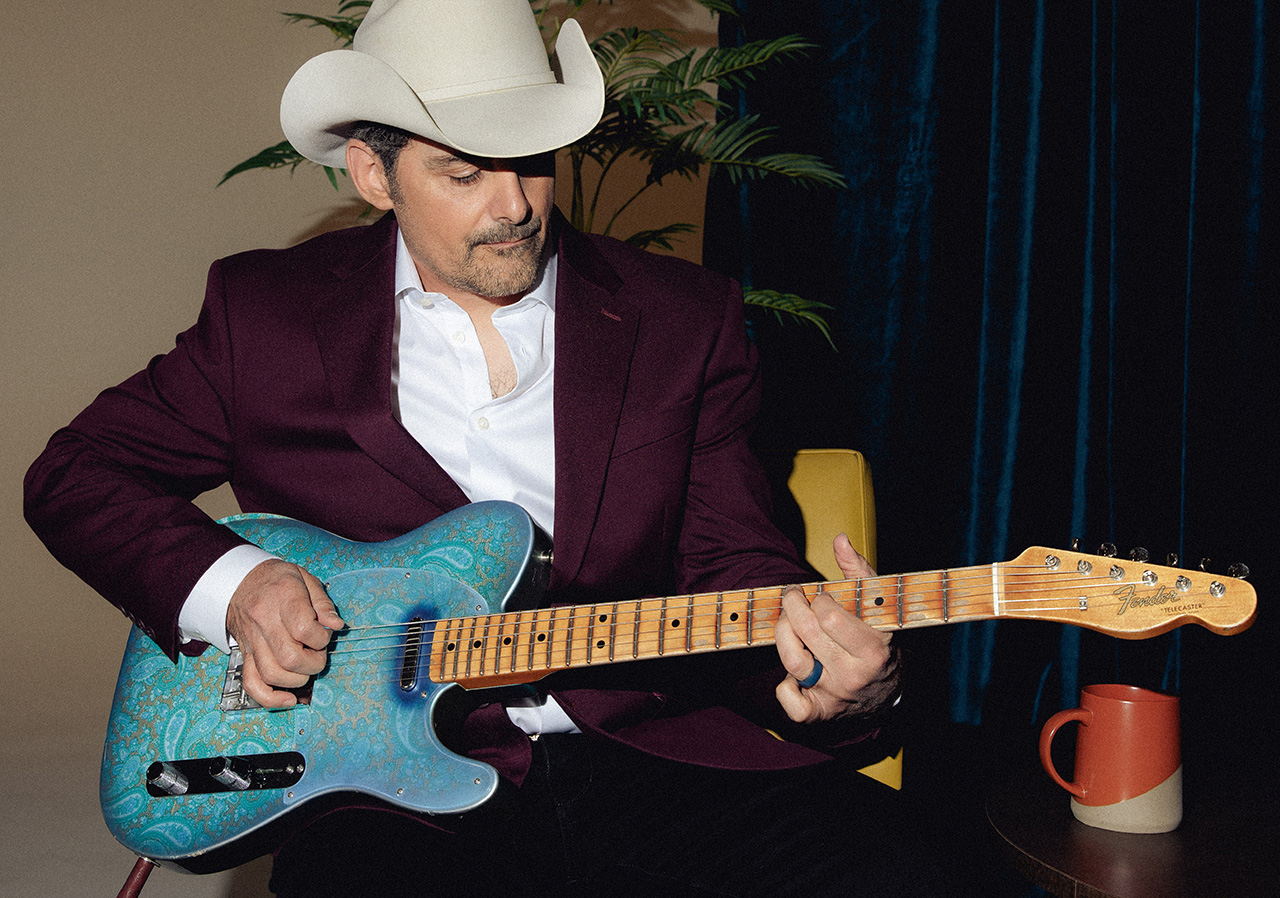
Country music superstar Brad Paisley is known for his virtuosic guitar skills and signature Telecaster sound. His “Lost Paisley telecaster” is a prime example of how the Telecaster can be used to create a unique musical identity.
(Image credit: Fender)
2. Keith Richards
The Rolling Stones’ Keith Richards has famously used a Telecaster throughout his career, contributing to the band’s iconic rock sound. His modified Telecasters have become synonymous with his gritty, powerful riffs.
3.James Burton
Known as the “Master of the Telecaster,” James Burton has played with legends like Elvis presley and Ricky Nelson. His innovative techniques and use of the Telecaster have influenced generations of guitarists.
Practical Tips for Telecaster Players
if you’re considering adding a Telecaster to your collection or want to enhance your playing experience, here are some practical tips:
Experiment with Pickup Settings: The Telecaster’s two pickups offer a range of tonal options. Try different combinations to find your unique sound.
Adjust the Action: Proper setup can greatly improve playability.consider adjusting the action to suit your playing style.
Use Quality Strings: Invest in high-quality strings to enhance tone and sustain.
Explore Effects Pedals: the Telecaster responds well to various effects. Experiment with overdrive, delay, and reverb to expand your sound palette.
First-Hand Experiences
Many musicians have shared their experiences with the Telecaster, highlighting its impact on their music:
“The Telecaster was my first guitar, and it shaped my entire musical journey. Its sound is unmatched, and I still reach for it every time I play.” – John Doe, indie Musician
“I love how versatile the Telecaster is. Whether I’m playing country or rock, it always delivers the tone I need.” – Jane Smith, Session guitarist
Join the Beatbounty Community
As you explore the world of the Fender telecaster, consider joining the beatbounty platform. Create an account today and submit an ad to connect with fellow musicians and share your passion for music!