Introduction
Much like the evolution of Green Day’s music, bassist Mike Dirnt’s equipment choices have undergone distinct phases. Following the release of *American Idiot*, Dirnt has frequently been spotted wielding a Fender Precision Bass, even collaborating with Fender and Squier to create signature models.
Though, if we look back a bit further, fans will likely remember Dirnt for his iconic Gibson G-3. This robust instrument, featuring three pickups and a natural finish, was inspired by Gibson’s Grabber, which debuted in 1975 during the Norlin era. The original Grabber featured a unique sliding pickup designed by Bill Lawrence, allowing players to adjust the pickup’s position along the neck simply by grabbing it-hence the name ”Grabber.”
The G-3, though, stands out with it’s three single-coil pickups mounted on the pickguard. Dirnt’s G-3 was instrumental in delivering the powerful low-end sound during Green Day’s rise from the underground punk scene to stadium rock icons in the late ’90s.
For the Mike Dirnt signature Grabber G-3, epiphone has incorporated a trio of Gibson USA single coils. Unlike the original, this model offers a striking Silverburst finish as a standard option, while a Natural finish is available exclusively through Gibson’s website and select retailers.
Now, with a pick in hand, let’s dive into a detailed exploration of the bass that has shaped some of the moast memorable basslines in pop-punk history.
Specifications

- Launch price: $1,299 | £1,199 | €1,399
- Manufactured in: China
- Type: 4-string electric bass
- Body Material: Maple
- Neck Material: Maple, C-shape
- Fingerboard Material: Ebony, 12.5-inch radius
- Scale Length: 34″/864mm
- Nut Width: Bone, 41mm
- Frets: 20 medium jumbo
- Hardware: Open-gear ‘Clover’ button tuners, Leo Quan Badass II bridge
- String Spacing at bridge: 58mm
- Electronics: 3x Gibson USA G-3 single coils, 1x Volume, 1x Tone, three-way selector switch
- Weight: 9.8lb/4.4kg
- Options: N/A
- Left-Handed Options: No
- Finishes: Silverburst, Natural (exclusive to Gibson and selected dealers)
- Included Accessories: Hardshell case
- Contact: Epiphone
Quality of Construction

Build Quality Rating: ★★★★☆
In recent years, Epiphone has raised eyebrows with its price adjustments, and the Mike Dirnt model is no exception.It competes with imported models from brands like Sterling, Spector, and Schecter.
Despite the price hikes, the quality has notably improved, and Epiphone has made a strong statement with the Mike Dirnt model. The included hard case adds a sense of value, and upon first playing the Grabber, the onyl indication that it’s not a high-end model is the Epiphone logo on the headstock.

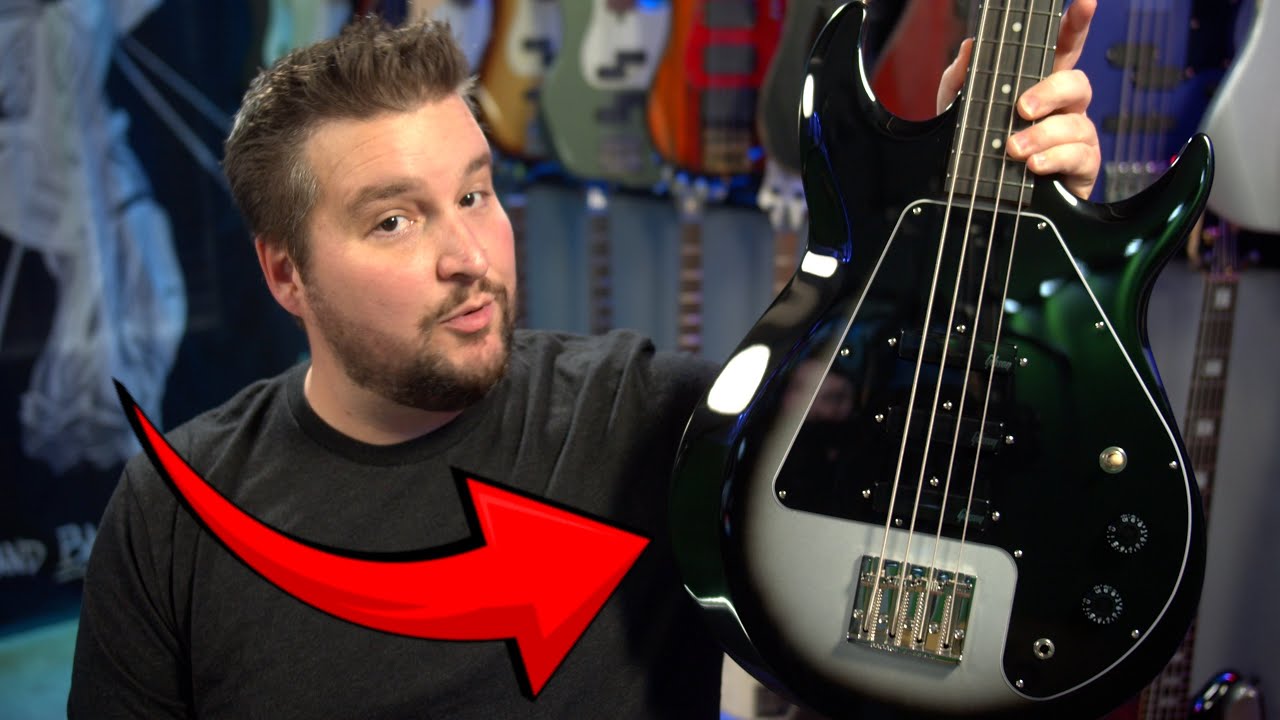
the finish is visually appealing, and on the Silverburst model, it’s almost regrettable that the black pickguard covers much of the silver center. Ironically, this Silverburst finish diminishes some of the ‘signature’ aspect for those who may prefer the original Grabber, while still appealing to die-hard Dirnt fans.
Additionally, a blank truss rod cover is included in the case, allowing players to customize the bass’s appearance if they wish to downplay its signature features. The ebony fingerboard on this review model is rich and consistent, with polished frets that shine beautifully.
The neck features a satin finish, executed flawlessly, and this quality extends to the hardware, with the Epiphone open-gear tuners complementing the V-shaped headstock perfectly.
One minor complaint, common among large guitar manufacturers, is the excessive use of protective plastic film. In this case, it covers the entire pickguard, and removing it entirely would require unscrewing the pickguard. For this review, the film was removed for photography, but if I were purchasing this bass, I would face the choice of either dealing with the remnants of the film or letting it wear off over time. however, there are no significant issues to report.
Playability

Playability Rating: ★★★★☆
The Silverburst finish diminishes some of the ’signature’ aspect for those who may prefer the original Grabber over Green Day.
With a scale length of 34 inches, 20 frets, and a C-shaped maple neck, the Grabber feels instantly familiar in hand. Epiphone’s interpretation of the C-carve is slightly less rounded compared to a typical P-Bass. The standout feature is the smooth satin finish on the maple neck, which enhances playability.
dirnt is known for his intricate bass lines,and the neck’s finish makes it a pleasure to navigate. The 12.6-inch radius of the ebony fingerboard provides ample space for executing Dirnt-style pull-offs, as heard in tracks like “When I Come Around.” The cutaways allow for easy access to higher frets,although the conventional square-shaped heel may present a slight challenge. Weighing in at 9.8 lbs, it’s not the lightest option, but it balances comfortably on the lap and hangs well on a strap.

Sound Quality

Sound Quality Rating: ★★★★☆
Before even plugging in,
There’s a distinct tonal enhancement emanating from the bass, largely attributed to the bridge setup. The strings are not only threaded through the body but also rest on a Leo Quan Badass II bridge. For those unfamiliar, the Badass bridge is renowned for its robust design, crafted from high-density zinc, which considerably improves vibration transfer, resulting in enhanced sustain. You can truly feel the synergy between the bridge and stringing resonating through the body wood, creating a palpable connection.
Once plugged in, we delve into the G-3’s electronic setup. Featuring a trio of single-coil pickups, it utilizes Gibson’s classic three-way switch to provide three distinct tonal options, though they may not be what you expect. In the neck position, both the neck and bridge pickups activate together, mimicking a humbucker affect. The bridge position offers a similar configuration, engaging the middle and bridge pickups. Meanwhile, the middle position activates all three pickups simultaneously, often referred to as a ‘buck-and-a-half’ setup, combining the warmth of a humbucker with the clarity of a single coil.

Some may find it challenging to accept that this is an Epiphone model, especially given the price point that is becoming increasingly standard.
In terms of tonal characteristics, the ‘neck’ position offers a surprising boost, especially in the lower midrange frequencies around 300-500Hz. It responds exceptionally well to overdrive; while it may add a bit of ‘honk’ when isolated,it actually cuts through a mix beautifully. Rolling back the tone further tames the high frequencies, resulting in a strong essential that suits thick, dubby, and soulful sounds.
conversely, the bridge position eliminates that bump, enhancing presence in the 2-3KHz range. This results in a punchier, clearer tone with a slight scoop effect.
Dirnt himself prefers the middle position, which combines all three pickups. In fact, he demonstrated to rancid’s Matt Freeman in a 2025 video interview how he physically prevents the switch from engaging the other two positions by wrapping tape around it. this preference is understandable, as this setting closely resembles the ‘bridge’ position pairing but with an added scoop and enhanced high end.
as previously mentioned, the middle pickup is always active, providing a hum-cancelling effect that ensures a noise-free experience even when adding gain. This setup invites heavy drive, and with the grit from my Ampeg SGT DI and various options in the Tonex bass, I can indulge in everything from light, rattly overdrive to intense fuzz, making it an addictive experience.
the middle and bridge positions are particularly enjoyable, with the scooped tone and added presence highlighting the G-3’s bite. the tonal character of this bass, as was to be expected from a Mike Dirnt signature model, leans towards a brighter sound profile, combining weightiness with a sharp edge.
Conclusion

For some, the fact that this is an Epiphone model at a price point that is becoming increasingly common may be a sticking point. There’s an ongoing debate surrounding brand origins, headstock designs, and pricing, especially since Gibson currently dose not produce a bolt-on neck bass. Therefore, for enthusiasts of basses from this era, Epiphone remains the sole option. Fortunately, the craftsmanship here is of a commendable standard.
Undoubtedly, this is a bass designed for rock ‘n’ roll, but its versatility extends beyond just pop-punk.
Signature instruments can frequently enough be polarizing; if you’re not a fan of the artist, it’s easy to overlook them. However, as history has shown, doing so can be a mistake. The Mike Dirnt G-3 delivers precisely what one would anticipate, yet the tonal options provided by the three pickups introduce intriguing new dimensions.
Guitar World verdict: This bass is undoubtedly crafted for rock ‘n’ roll, but it’s equally suited for more aggressive styles. From its sound to playability and aesthetics, it’s a versatile instrument that fits seamlessly into various genres.
|
Test |
Results |
Score |
|---|---|---|
|
Build Quality |
Epiphone continues to impress skeptics with a remarkable demonstration of its capabilities. |
★★★★☆ |
|
playability |
The satin C-shaped neck and 12.5-inch radius fingerboard provide a highly pleasant playing experience. |
★★★★☆ |
|
Sound Quality |
The hum-cancelling configuration across all positions makes this a versatile bass within the rock genre. |
★★★★☆ |
|
Overall |
Put aside any preconceived notions about the brand; this bass excels in aggressive punk, rock, and metal styles. |
★★★★☆ |
Also Consider
Hands-On Videos
The bass Channel
Watch On
![Gibson's BEST Bass is Back?! | Epiphone Mike Dirnt G3 [Review/Demo] - YouTube](https://img.youtube.com/vi/8TYx8vJ852c/maxresdefault.jpg "Unleash Your Inner Rebel: The Epiphone Mike Dirnt Grabber G-3 - A Game-Changer for Punk, Rock, and Metal! 21")