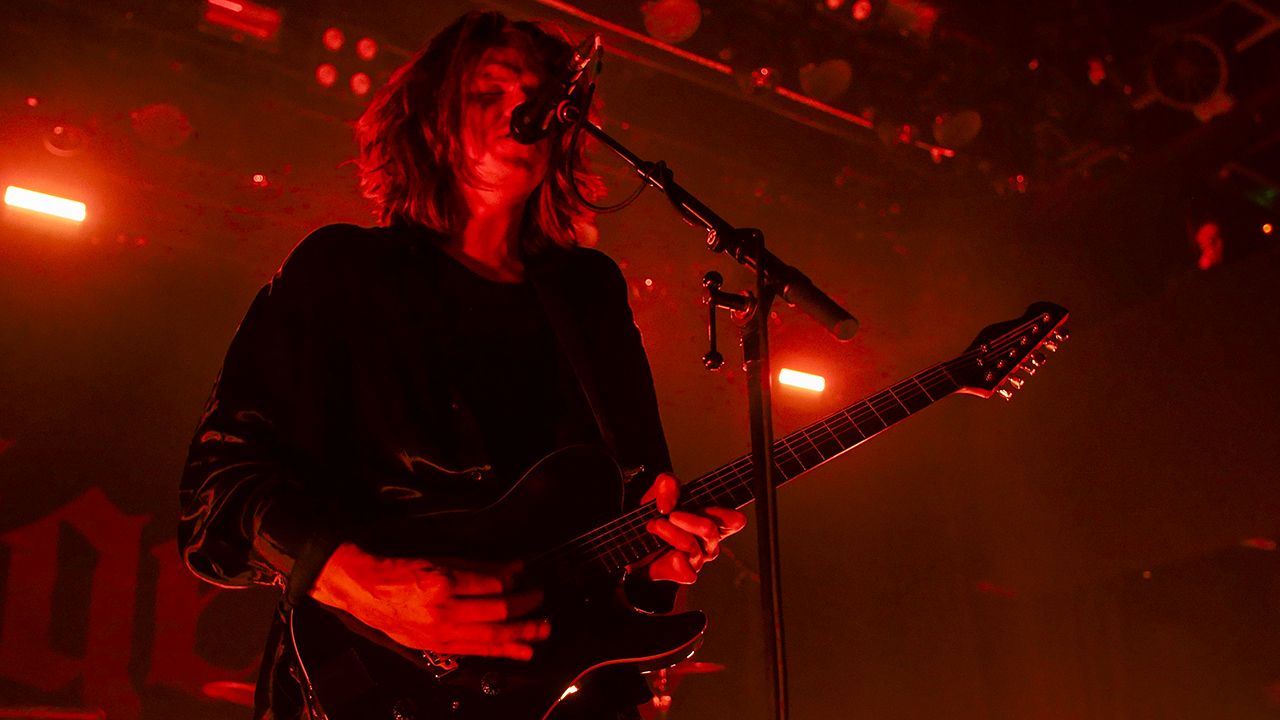
Discover Tigercub: The Alt-Rock sensation Backed by Stone Gossard
When Stone Gossard first experienced Tigercub’s sophomore album, As Blue as Indigo, he was so captivated that he took to the pearl Jam Twitter account to invite the band to join his label, Loosegroove Records.
“It’s a dream come true,” shares Jamie Hall, the band’s frontman. “To have a guitarist point you out at a show and invite you on stage is surreal! It was a bold move for him to do that publicly, and it’s incredibly validating to receive such respect from someone you admire. We couldn’t possibly decline!”
Bringing the British alt-rock trio into the Loosegroove fold was a critically important achievement for Gossard, who regards Hall as a standout talent of his generation. “I’d put his riffs up against anyone in the rock scene today,” he praises. “He’s on par with legends like Homme or Morello, and he can sing while shredding. It’s mind-blowing.”
This commendation comes from a musician known for crafting some of the most iconic riffs of the ’90s and for signing Queens of the stone Age for their debut in 1998. Now,as Tigercub prepares to release their fourth album,Nets to Catch the Wind-their second under Loosegroove-Hall is determined to meet those high expectations.
“It’s a bit daunting,” he admits. “Being compared to such influential musicians means I have to live up to that praise. I don’t want to let Stone down!”
Stone Gossard’s Creative Influence
Gossard was deeply involved in the album’s production, acting as a mentor and creative guide. “He encouraged me to step outside my comfort zone,” Hall explains. ”He shared stories about the recording of Mirror Ball with Neil Young. The lead single, I’m the Ocean, was captured in a single take, live in the studio. I would have never attempted that before!”
“If it were up to him, we would have recorded the entire album in one day. But I felt that Tigercub hadn’t yet earned that right. After the meticulously crafted Perfume of Decay [2023], he helped me embrace a more spontaneous approach, allowing the band to play together in the same room for the final take.”
“Sometimes, a mistake can lead to a magical moment. If the energy of the performance is right, that’s far more valuable than a polished but lifeless recording. I think Pearl Jam recorded Even Flow live around 70 times without a click track. I had never even considered the absence of a click!”
Embracing a Raw Sound
“One key lesson from Stone was that playing as close to live as possible, with minimal processing, allows you to truly express yourself,” Hall reflects.
Nets to Catch the Wind was recorded using a WEM Dominator combo, Hiwatt Custom 50, and a Peavey Bandit paired with a JCM800, along with a Korg SDD-3000 delay pedal. The rest was all about tone and volume control, with Hall’s fingers dancing across the strings and experimenting with various picks. “A simpler setup gives you more room to inject your personality into the music,” he notes.
“Just like cave divers who risk disorientation without proper oxygen levels, having too much gear can muddle your sound-though thankfully without life-threatening consequences!”
Gear Talk: guitars and Amps
“I have a collection of Chapmans in various styles. my primary guitar is the ML3 BEA Rabea Massaad signature baritone. Rabea’s studio is right next to ours, and when he switched to Music Man, he texted me asking what I wanted from his gear.”
“Playing in drop C and lower on a longer scale was a revelation. The strings felt like train tracks, and adjusting to a wound G string meant I had to shift my approach away from conventional bluesy solos. Instead, I found myself channeling more John McGeoch or The edge vibes, which gave the music a rich, throaty midrange quality.”
“The stock ML3s with single coils are fantastic. I have two with maple necks. One was a rental and a bit worn, but it has this beautiful chimey character in standard tuning. My tobacco one is perfect for the Tom Morello drop C sound; it’s incredibly reliable.”
“For drop-tuned tracks, I also utilized an ML1X Strat, which shines in the out-of-phase position. Rolling the volume down to seven brightens the tone, making it incredibly sharp-perfect for soaring, arena-ready sounds.”
The riffs exist independently. Their only connection to the song’s key is the first note.
“I primarily soloed on a standard-scale Lawmaker, running everything through various overdrive pedals to push the amps to their limits.”
Future Plans and Gear Innovations
“I had teased a signature Chapman model a couple of years ago, but that project is currently on hold. I had customized my black ML3 with gothic decals inspired by the Perfume of Decay album art and added a hot rail pickup for versatility, so I wouldn’t need to switch guitars as often. Rob wanted to release that version, but we hit some roadblocks.”
“As for my amp setup, I’ve created a unique combination. We picked up an old Peavey Bandit, which is a blast for ’80s metal. The WEM has an old Fane speaker, giving it a distinct midrange sound. Alone, it might seem limited, but paired with a JCM800, it fills in the gaps beautifully.I can’t stray from Marshalls; they sound best when cranked to 10, letting the guitar controls dictate the tone.”
“There’s an old Fender Twin at Rockfield Studios that everyone has used; it’s a rite of passage. But with the Hiwatt, WEM, and Marshall, I feel like I have all my bases covered.”
What Makes a Great Tigercub Riff?
“Most of our riffs incorporate some form of chromaticism.They exist independently of the song’s key, with the only connection being the initial note. The rest is about creating dramatic, twisting melodies.”
“Mickie Most viewed songs as mini-films with a cinematic quality. It’s exciting to play with listeners’ expectations.”