The Evolution of the Gibson SG: A Closer Look at Its Iconic Design
The Gibson SG, while not as flamboyant as its counterparts like the Explorer and Flying V, made waves with its sharp contours and distinctive horns when it debuted at the NAMM Show in July 1961. Even decades later, its design continues to spark debate among guitar enthusiasts.
Contextualizing Gibson’s Innovations
To fully appreciate the SG’s design, it’s essential to understand the competitive landscape of the early 1960s, especially the influence of Fender. Models such as the Stratocaster, jazzmaster, and Jaguar had set trends with their lightweight bodies, double-cutaway designs for improved access to higher frets, and sleek, fast necks.
In contrast, Gibson’s Les Paul Standard and Custom models were essentially heavier, scaled-down jazz guitars. While semi-hollow designs offered some playability advantages, they were often bulky and prone to feedback issues.
The Slimline Revolution
The introduction of the Les Paul junior and Special models in 1958 hinted at a shift in Gibson’s design philosophy, paving the way for the SG. This model evolved from the Special, featuring a solid mahogany body that was slimmed down from 1.5 inches to 1.375 inches, enhancing its aesthetic appeal with pronounced contours.
While many players embraced the SG’s improved playability, it wasn’t without its challenges. The lighter body contributed to the SG’s notorious neck heaviness, and some players found the long, slender necks reminiscent of bows rather than guitars.
Structural Challenges
Despite its innovative design, the SG faced structural issues that made tuning stability a meaningful concern. The risk of headstock breaks was prevalent, as the reduced body size meant less wood and a smaller gluing surface where the neck met the body. Consequently, many SGs have experienced breaks at this junction, leading to frequent repairs.
From Les Paul to SG Standard
Les Paul himself recognized the SG’s structural shortcomings early on, leading to the removal of his name from the truss rod cover by the third year of production.The model name transitioned from Les Paul SG Standard to simply SG Standard. Les noted, “The SG had issues with neck strength; I wanted a solid instrument that sustained well.”
However, iconic players like Frank Zappa, Angus Young, and Derek Trucks seemed unfazed by the sustain issues. Pete Townshend, as an example, utilized the SG’s flexible neck to create unique vibrato effects, as showcased in his performance on Live At Leeds.
Golden Era Collectibles
For collectors, the golden age of the SG Standard is frequently enough considered to be from 1961 to 1963. These models not only carried the prestige of the Les Paul branding but also frequently featured the coveted ‘Patent Applied For’ humbucking pickups. Although Gibson secured its patent in 1959, it continued to use up existing stocks of these pickups for several years, with some examples still being installed as late as 1965.
However, not all ‘Patent Applied For’ pickups are equal. The versions produced after mid-1961 featured shorter Alnico V magnets, resulting in a thicker, midrange-focused tone. Some pickups even bore Patent Number decals while still conforming to the earlier specifications, adding to the complexity for collectors.
The 1963 SG: A Rare Find
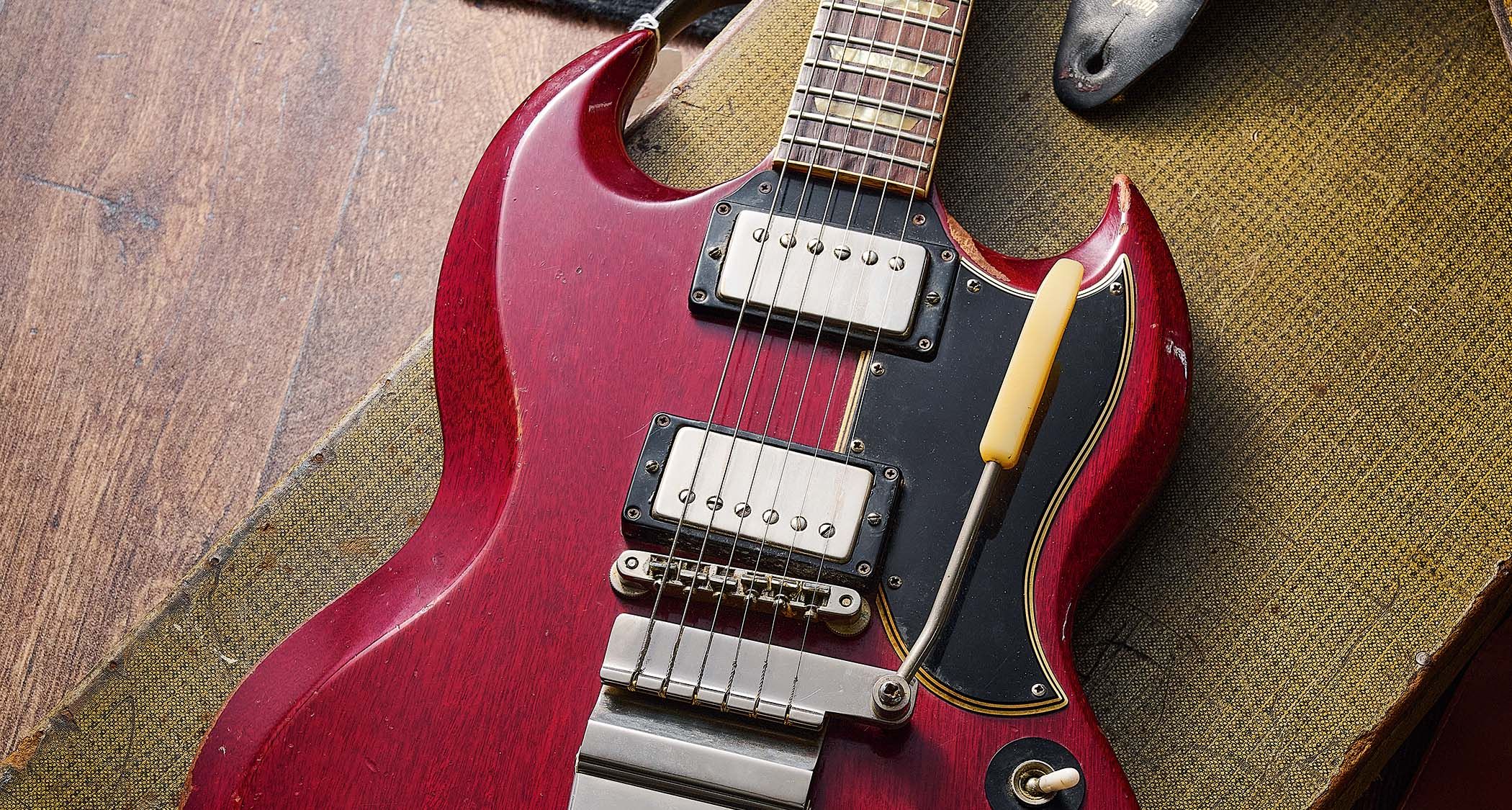
Among SG enthusiasts,1963 is often hailed as the pinnacle year for the model. A notable example from this year has a rich history, tracing back to Hessy’s Music in Liverpool, where it was originally purchased. This guitar later sold for £10,000 at auction in December 2025, highlighting its value.
This particular SG was actively used on the Liverpool music scene,with its owner performing with bands like The Squares and the Renicks,even sharing the stage with The Beatles at the iconic Cavern Club.A charming detail is the ’Frank Hessy LTD’ sticker affixed to the back of the headstock, a testament to its origins.
Preserving Originality
Fortunately, this SG has avoided the common modifications that many guitars underwent during the 1960s and 1970s. While it shows signs of wear from regular use, including finish rub-throughs and dings, it retains its vibrant cherry color and remains free from repairs or overspray.
The electronics are entirely original, featuring a complete set of 1963 potentiometers and two pickups. Given that 1963 was a transitional year, it’s not surprising to find a Patent Number pickup in the bridge position alongside a Patent Applied For in the neck. According to auctioneer Luke Hobbs, the only notable difference is the decal, as both pickups deliver similar tones.
Minimal Modifications
Aside from a replaced tuner screw and a new switch tip, this SG is in its original condition. The owner’s son brought it to auction in a hard case supplied by Frank Hessy, which also contained the original Gibson strap.
Why 1963 SGs Stand Out
One reason 1963 SGs are highly sought after is their retention of desirable early features, often without the complications of Gibson’s infamous sideways vibrato. While some players appreciate this feature, it often leads to tuning instability, making it more of a nuisance than a benefit.
Gibson, aware of the popularity of Fender’s vibratos, opted to create its own design, which moved side to side rather than up and down. While heavy, this design effectively counteracts neck dive and is credited with enhancing sustain.
the Maestro Vibrola, which replaced the sideways vibrato, is a simpler mechanism that allows for gentle vibrato effects without compromising tuning stability. Finding the right balance for the screw-on arm is key to its effective use.
Evolution of the SG
From 1963 onward, the SG continued to evolve. By 1965, Gibson transitioned from nickel-plated to chrome-plated hardware, and the neck joint was redesigned for improved strength and stability. The fretboard width gradually decreased,and the headstock angle was adjusted,reflecting Gibson’s ongoing commitment to innovation.
Today, guitarists can choose from a variety of styles and features in both Epiphone and Gibson models, ensuring that the legacy of the SG continues to resonate with musicians around the world.