The Gibson SG standard: The Unsung Hero of Rock Guitars
When discussing iconic solidbody guitars, the Gibson Les Paul Standard and Fender Stratocaster often steal the spotlight, leaving the Gibson SG Standard in the shadows. Much like the legendary comedian Rodney Dangerfield, the SG Standard seems to get little respect despite its important contributions to music history.
Interestingly,while the SG Standard has graced countless classic tracks,its pivotal role-especially in hard rock and metal-often goes unrecognized. Our informal analysis suggests that during the influential eras of the mid-1960s through the 1970s, the SG was more popular than many guitarists might assume.
A Brief History of the Gibson SG
the Gibson SG, which stands for “Solid Guitar,” had a somewhat confusing inception in 1959. The initial models, including the SG Special and SG TV, were essentially the late-1950s Les Paul Special and Les Paul TV with the Les Paul branding removed.
The iconic SG shape we recognize today emerged in late 1960,when Gibson revamped the Les Paul Standard. This redesign introduced the distinctive “devil horn” double-cutaway body, which allowed for easier access to the neck. The mahogany slab body eliminated the maple top layer, featured beveled edges, and was nearly half an inch slimmer than the traditional single-cutaway Les Paul Standard.
The electronics configuration remained similar to the Les paul, featuring dual humbucking pickups, individual tone and volume controls, and a three-way pickup toggle. Though, the output jack was relocated from the side to the top of the guitar. This model retained the Les Paul Standard name until 1963, when it officially became known as the SG Standard.
Evolution Through the Decades
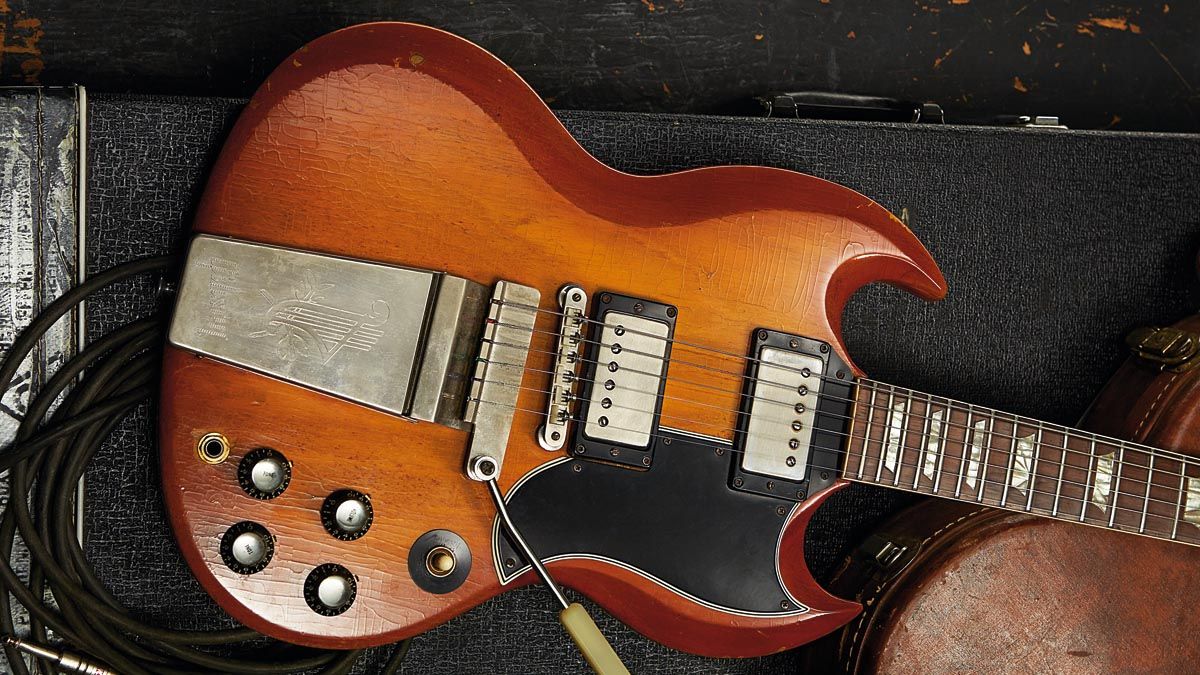
Throughout the 1960s, the SG underwent various modifications. Initially, all SG/Les Paul and SG Standards were equipped with a vibrato tailpiece, with early versions available in three types: the unpopular Sideways Vibrola, a short Bigsby, and a short Maestro Vibrola adorned with a decorative ebony block and pearl inlays.
By 1963, the long Maestro Vibrola with a plated tailpiece cover featuring a lyre logo became the standard. Starting in late 1965, the SG design transitioned to a larger “batwing” pickguard, with pickups mounted directly to the pickguard rather than using mounting rings.
Even though the SG Standard was temporarily discontinued between 1971 and 1972 with the introduction of the SG deluxe, it quickly returned to production and has remained a staple ever as. notably, 1972 marked the first year the SG Standard was offered with a stop tailpiece rather of a vibrato.
Famous Players and Their Impact
The SG Standard has been favored by numerous legendary guitarists. George Harrison famously recorded many Beatles classics with his 1964 SG Standard starting in 1966. Eric Clapton also made waves with his psychedelic-painted SG, known for producing his signature “woman tone” during his time with Cream.
Other notable players include Robby Krieger of The Doors, who tracked many of the band’s iconic songs with his SG, and a host of 1970s musicians such as Angus Young, Tony Iommi, Frank Zappa, Jerry Garcia, and Bob Marley.Even Barry Goudreau of Boston delivered memorable leads on an SG Standard.
Slide guitarists like Duane Allman and Derek Trucks have embraced the SG for its exceptional fretboard access. In recent years, the SG has found new enthusiasts in artists like Daron Malakian of system of a Down, Frank Iero of My Chemical romance, and nameless Ghoul from Ghost.
With its rich history and undeniable influence,the Gibson SG Standard deserves a place alongside its more celebrated counterparts. It’s time to give this remarkable guitar the recognition it truly deserves.