The Timeless Legacy of Alvin Lee’s Iconic Woodstock Guitar
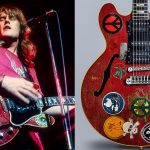
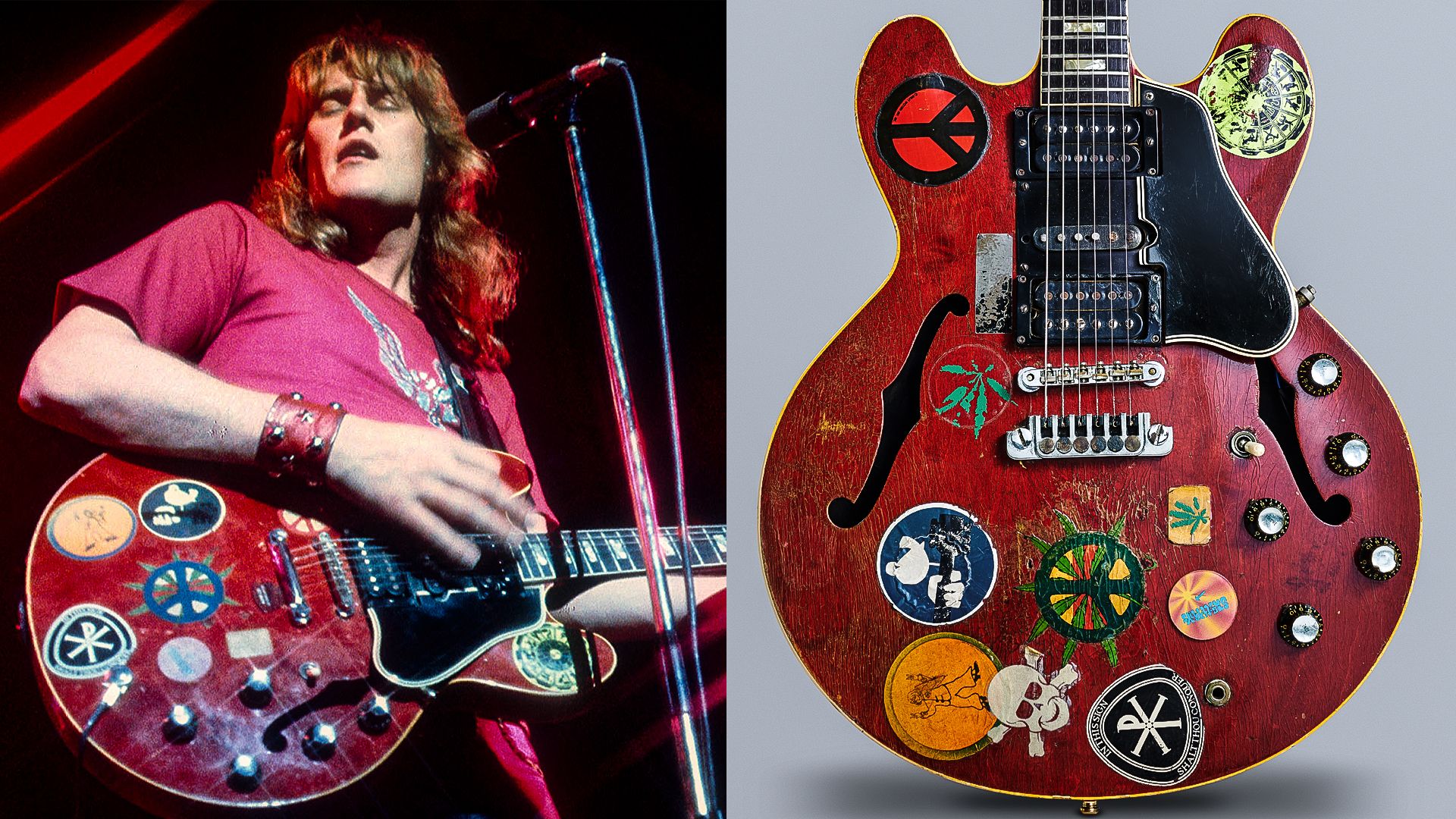
In the annals of rock history, the 1969 Woodstock festival stands out as a landmark event, showcasing unforgettable guitar performances. From Richie Havens’ soulful rendition of “Freedom” on his well-worn Guild D-40 to Pete Townshend’s infamous confrontation with Abbie Hoffman during The Who’s set, the festival was a melting pot of musical brilliance.Among these legendary moments, Alvin Lee of Ten Years After captivated audiences with his electrifying performance of “I’m Going Home” on his beloved Gibson ES-335, affectionately known as Big Red.This guitar has as become a symbol of rock heritage and is currently safeguarded by his daughter, Jasmin Lee.
The Birth of Big red
The story of big Red began in 1963 when Alvin Lee acquired the guitar for a mere £45 from Jack Brentnall’s music shop in Nottingham, England. By the time it graced the stage at Woodstock, Lee had already begun to personalize the instrument. One of his first modifications was the installation of a Fender single-coil pickup, strategically placed between the two PAF humbuckers, which allowed him to achieve a brighter, more cutting tone when desired.
In an interview with International Musician & Recording World in August 1975, Lee remarked, “I now have a Gibson that can sound like a Telecaster whenever I want it to.” Alongside this technical enhancement,he adorned Big Red with an array of stickers-peace symbols,psychedelic designs,astrological motifs,and the emblem of the Ten Years After Music lovers Society-transforming it into a unique visual statement.
Accidental Preservation
Ironically,the guitar’s iconic look was solidified by an accident.During a performance at London’s marquee Club in 1972, Lee tossed Big Red into the air, only for it to collide with the low ceiling, resulting in a broken neck. “He often threw it around on stage,” Jasmin recalls. “But that night, he broke the dot-inlaid neck right off.”
After sending Big Red to Gibson for repairs, the guitar returned with a new block-inlay neck and all the stickers lacquered over, effectively sealing its appearance in time. “The stickers became an integral part of the guitar,” Jasmin explains. “He couldn’t remove or alter them.”
A Rock Artifact
This unintended preservation turned Big Red into a cherished artifact of classic rock. Even though Lee referred to it as a 1958 model, the replacement neck obscured its exact manufacturing date. Throughout the 1970s and into the 1980s, Lee continued to perform with Big Red, but as its value soared, he gradually retired it from live shows. By 1992, rising insurance costs lead him to store it away entirely.
In recent years, Gibson sought to create a signature replica of Big Red, culminating in a meticulous recreation for the 50th anniversary of Woodstock in 2019. “Gibson collaborated closely with Dad on this project,” Jasmin shares. ”They sent him several prototypes,but he was very particular,often saying,’Nope,that’s not right.’”
The Future of Big Red
Today, the original Big Red remains securely stored, while its replicas are displayed at Dean St. Studios in London. The lee family hopes to find a new owner who appreciates not only the guitar’s musical meaning but also the rich history encapsulated in every modification and sticker sealed beneath its lacquer finish. As of 2026, Big red continues to be a testament to Alvin Lee’s legacy and the vibrant spirit of rock music.

(Image credit: Glen Newman | courtesy jasmin Lee)